

Reaction yield and selectivity
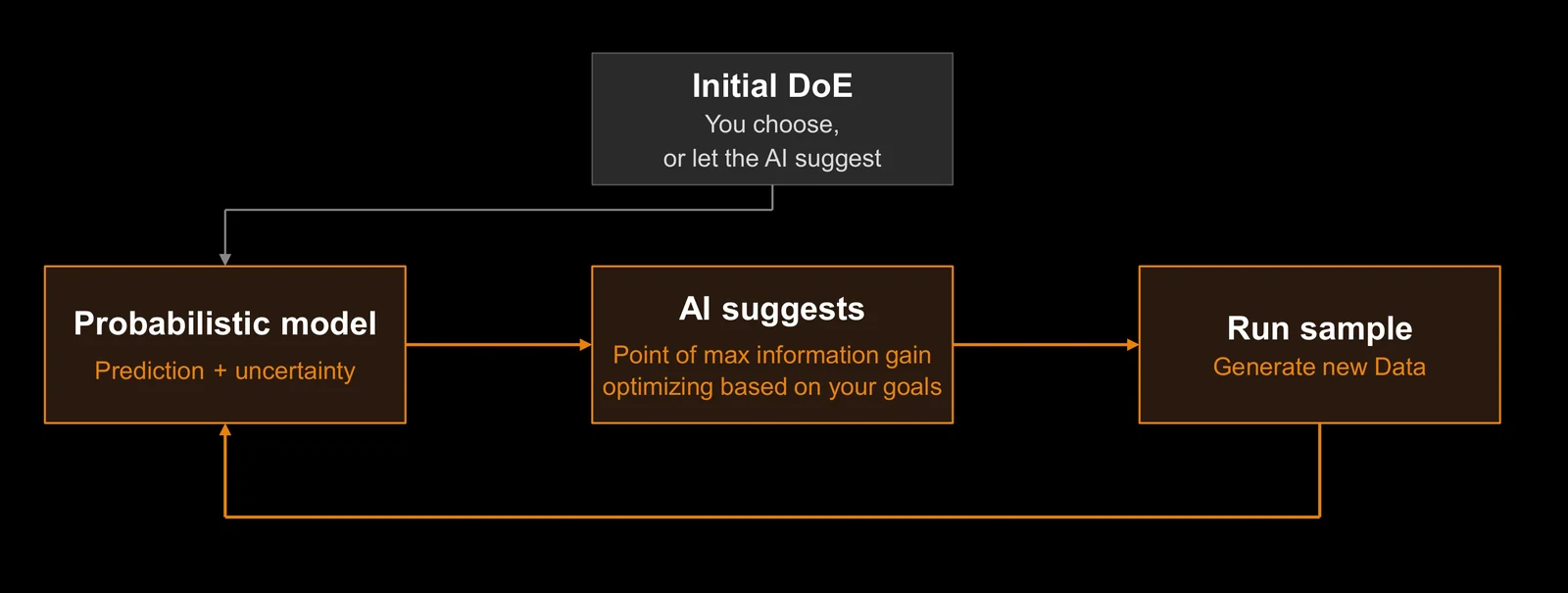
Yield, selectivity and cost pull against each other, so STOCHOS proposes the conditions worth booking next from the runs you already have.
How Bayesian optimization works →
Reagents, concentrations, temperature, pressure and time interact.
Every experiment, batch and pilot costs time, material and equipment.
Lab results do not always transfer cleanly to pilot and production.
In chemical process optimization, higher yield can raise cost or push quality out of spec: multi-objective Bayesian optimization shows the trade-off, and sensitivity analysis ranks which parameters drive each outcome.
How sensitivity analysis works →An illustrative sensitivity ranking, not customer data. The gap between solid and dashed bars comes from interactions between parameters.
Multi-fidelity modeling ties lab, pilot, and plant data together, so a reliable plant-scale prediction takes fewer full-scale batches.
How multi-fidelity modeling works → Guide: lab-to-production scale-up →Ten problems in chemical R&D and production that share one shape: few runs, each expensive, several targets pulling against each other.
Yield, selectivity and cost pull against each other, so STOCHOS proposes the conditions worth booking next from the runs you already have.
How Bayesian optimization works →
Each scale costs an order of magnitude more than the one below, so the cheap runs are used to inform the expensive ones.
Guide: lab to production scale-up →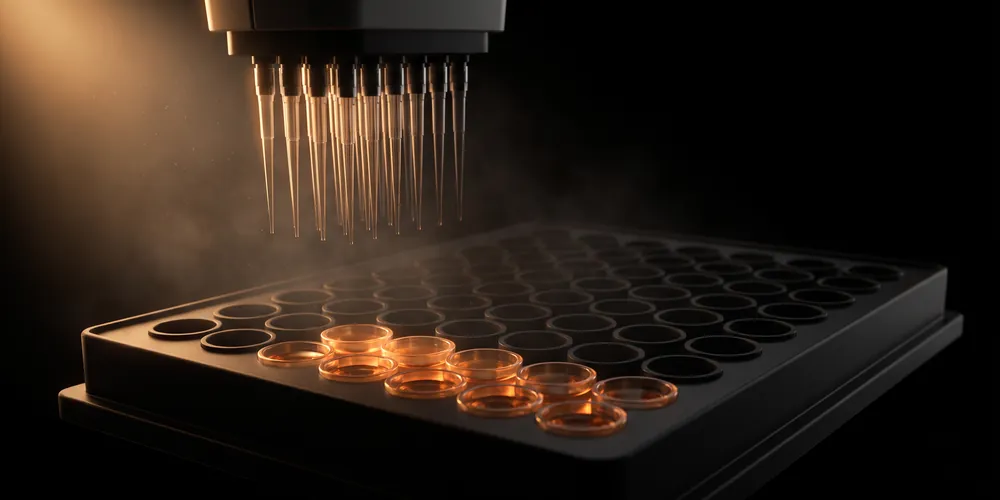
The platform runs more samples than a fixed plan can use, so each batch is chosen from what the last one taught.
Guide: planning high-throughput experiments →
Few runs, each costing days of cultivation, so every prediction carries an interval you can judge before booking the next one.
Guide: run fewer experiments →
The factor list is long and most of it does not matter, so sensitivity ranking decides where the campaign is spent.
How sensitivity analysis works →
Fractions have to sum to a fixed total and some groups have to be zero, so those rules enter the search as constraints.
Guide: variants that respect constraints →
Four or five components and cells that take days to cycle, the few-expensive-runs regime this engine is built for.
How uncertainty is quantified →
Temperature, residence time and mixing decide the outcome, so a few deliberate trials map the response surface. Parameter work, not plant control.
How surrogate models work →
The number you need is slow or destructive to measure, so a model predicts it from the ones you already log.
Guide: when to trust a prediction →
Fouling and wear are read from few inspections, so the trend is predicted with an interval that widens the further out it runs.
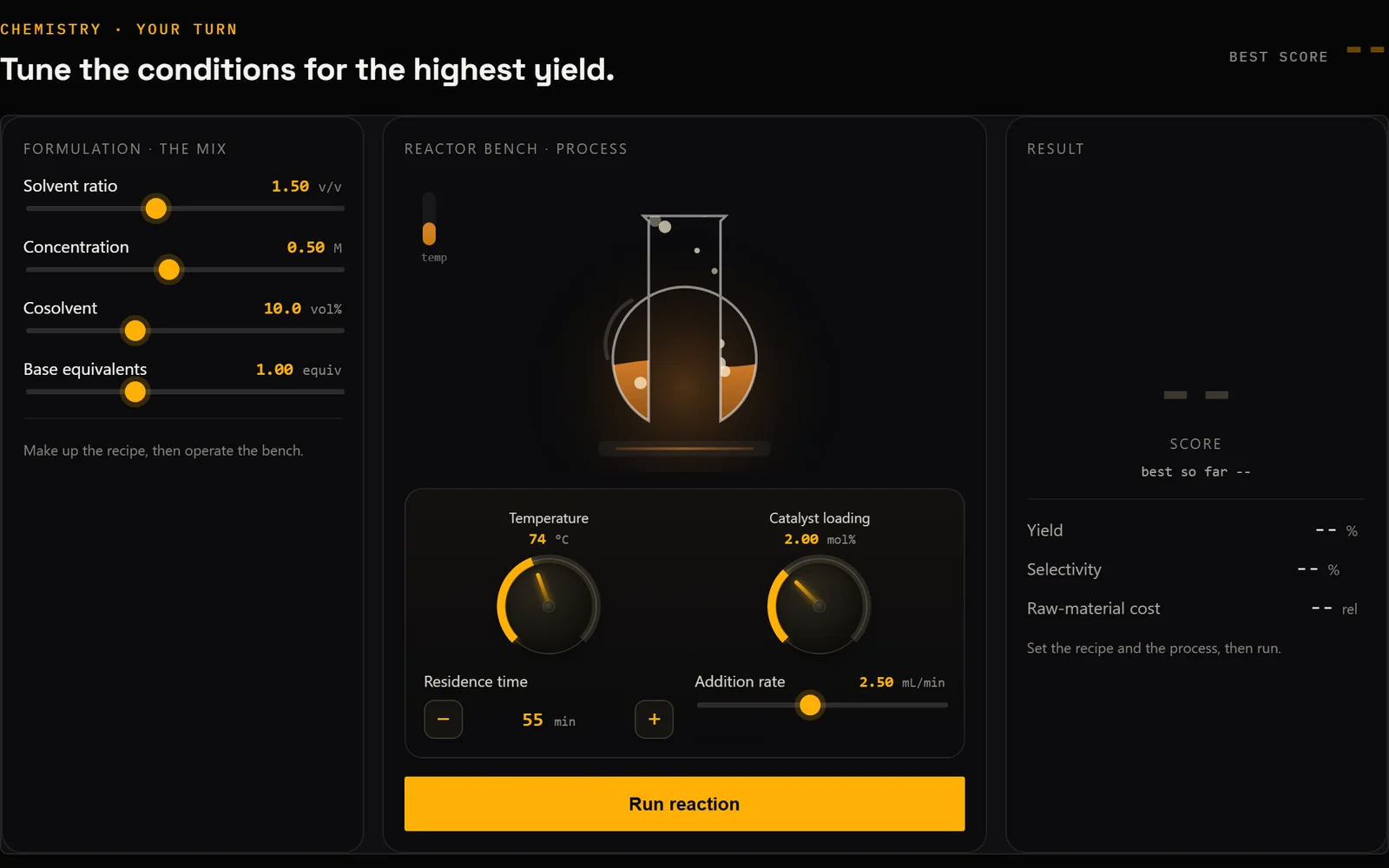
Guide: know when a model is guessing →You get a few tries to tune temperature, catalyst loading, residence time and solvent for the highest yield, keeping selectivity in spec and cost down. Then STOCHOS takes the same reaction, on the same score, and you see both answers side by side.
About 2 minutes · illustrative demo, synthetic data, response surfaces fitted offline from DIM-GP models
Send us one process target, its variables, and the runs you have logged. We will sketch how STOCHOS would plan the next campaign and where a pilot could begin.
STOCHOS runs on your own infrastructure; process data stays local.
STOCHOS learns from your existing experiments, estimates outcomes for conditions you have not run yet, with confidence bounds, and proposes the next run that teaches it the most. Each result updates the model, so the search adapts toward the target with fewer experiments than a fixed plan.
Yes. Multi-fidelity modeling combines data of different cost and accuracy in one model. Broad lab data covers the space and sparse production data anchors accuracy, which reduces the number of expensive large-scale runs needed to predict behavior at scale. That is the typical chemical scale-up pattern, where plant batches are the scarcest data.
Yes. Core modeling and optimization run on your own infrastructure by default, and STOCHOS Flow can drive a local language model through Ollama, so a run does not depend on external services. Optional cloud models are available if you choose them. In a local setup, sensitive process data and recipes stay on your systems.
Yes. Existing results seed the model: STOCHOS trains on your past experiments first, then the adaptive loop continues from there, so earlier work counts toward the target. It handles small datasets and mixed lab, pilot, and plant records. How many further runs you need depends on your system and targets, so there is no fixed sample count.