






















Turn small, expensive data
into models you trust.
STOCHOS does it locally.
What PI Probaligence provides
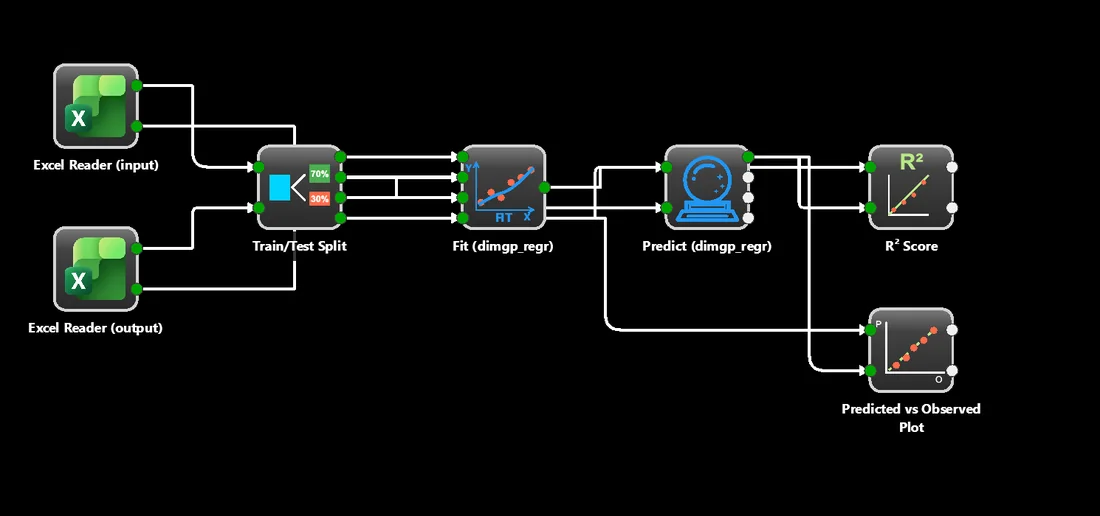
STOCHOS predicts. STOCHOS Flow turns it into agentic, reusable workflows. Both run locally.

One engine, three domains




Hundreds of workflows, all over the world
An official Ansys Technology Partner, with a global partner network behind hundreds of engineering and R&D workflows.


Your data and IP never leave your systems
Common questions
01What does PI Probaligence do?
PI Probaligence develops local, probabilistic AI for engineering and R&D. It uses your existing simulation, experimental, and process data to build fast surrogate models that predict results for new variants and quantify uncertainty. This shortens development cycles and supports more reliable decisions, without needing an in-house ML team.
02What is probabilistic AI?
Probabilistic AI returns a prediction together with a measure of confidence, not a single number with no context. For engineering, that means you can see where a model is reliable and where it is not, which matters when decisions carry cost or risk and data is limited.
03What is the difference between STOCHOS and STOCHOS Flow?
STOCHOS is the probabilistic intelligence layer: the modeling, prediction, and optimization engine. STOCHOS Flow is the visual, agentic workflow layer to build, automate, reuse, and export workflows. STOCHOS does the predicting; STOCHOS Flow makes it accessible and repeatable for a team.
04Does the software run locally?
Yes. PI is local-first. Every workflow runs on your own infrastructure, and STOCHOS Flow can use a local language model through Ollama. Optional cloud models are available only if you choose them. Local execution keeps sensitive data and IP on your systems, which matters for confidentiality and compliance.
05Can it run offline?
Yes. Using an offline license, STOCHOS supports fully air-gapped deployment: installed and run with no outbound network connections, so the entire workflow stays sealed on your own systems. The predictive engine and a local language model through Ollama run offline, and cloud models are simply off. The default networked install performs an online license check.