01
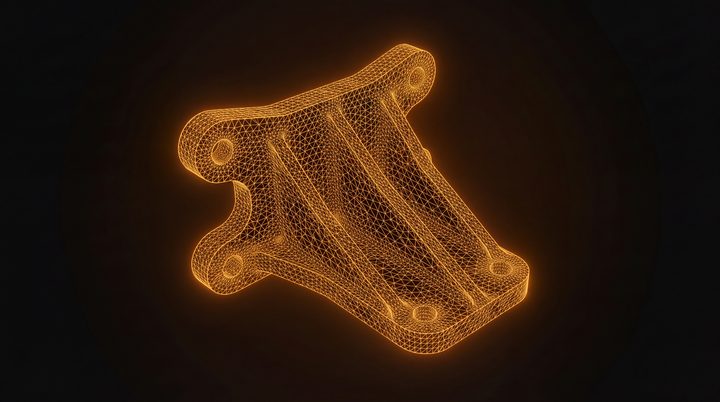
Main view and top view of the same shape. Each frame is a geometry the model can hand straight to a solver.

One shape, three surfaces: the field, the model's confidence, the check.
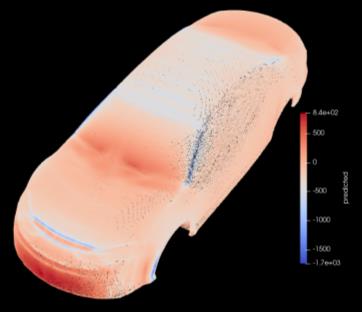
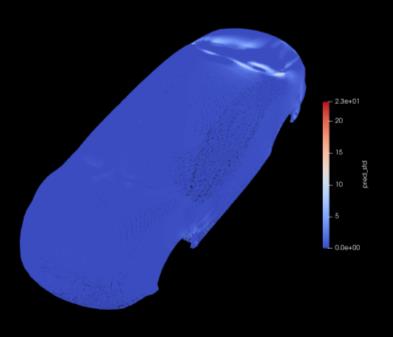
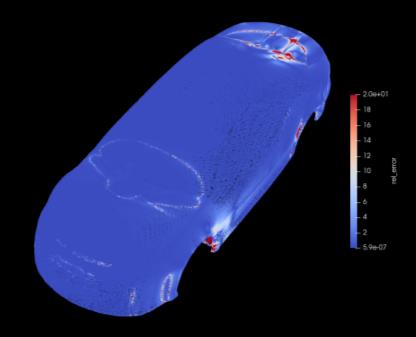
Train on the shapes you have already built and the model learns a continuous space of geometry, not a list of variants. Every point in it is a shape it can hand straight to a solver, and the ones between your training shapes are new.
Main view and top view of the same shape. Each frame is a geometry the model can hand straight to a solver.
Blade count, wrap and hub profile move together, so the shape stays one continuous object rather than a set of edits.
The shell changes shape without ever leaving the set the model considers buildable.
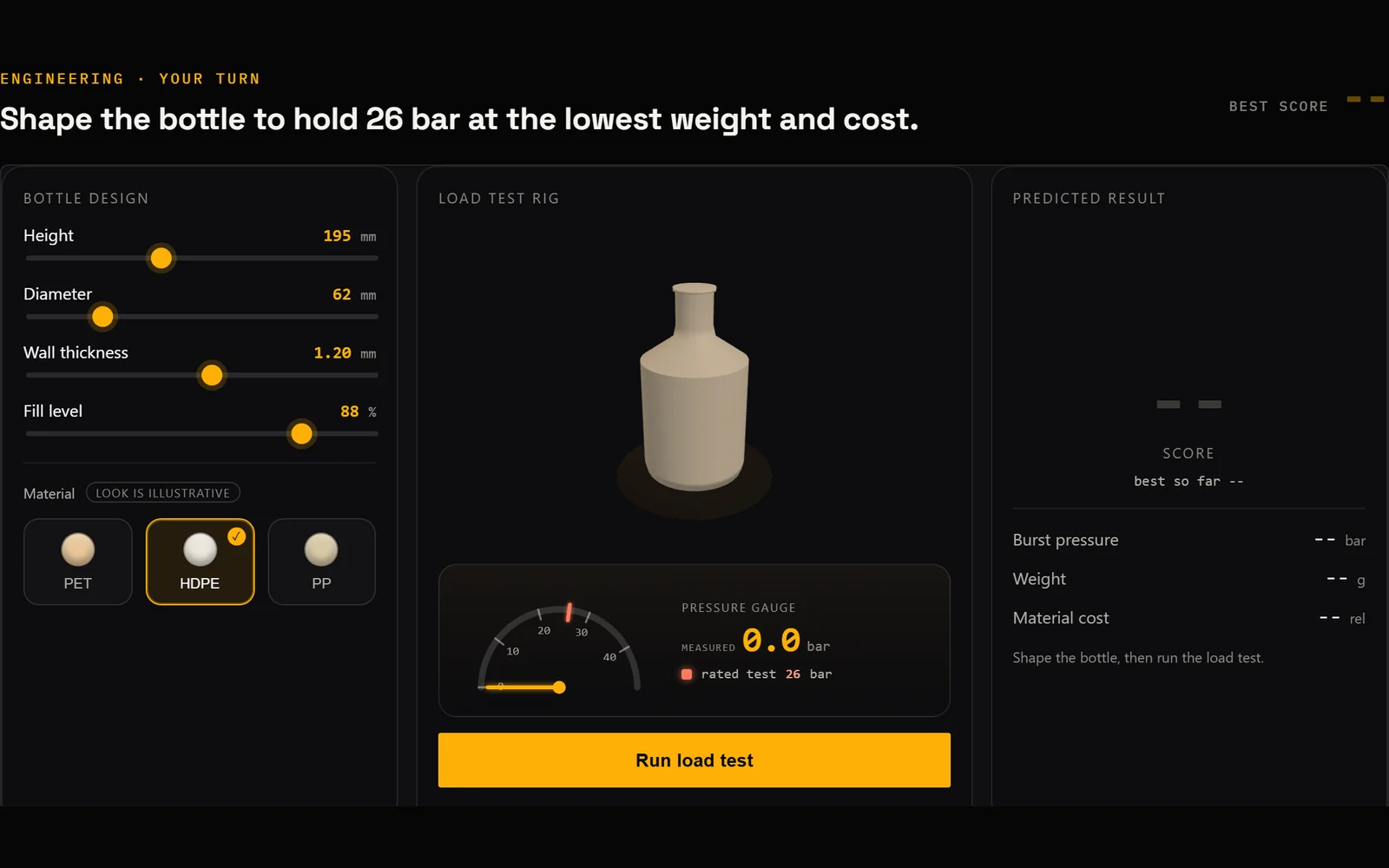
You get a few tries to shape a plastic bottle that passes a 26 bar pressure test at the lowest weight and cost. Then STOCHOS takes the same problem, on the same score, and you see both answers side by side.
About 2 minutes · illustrative demo, synthetic data, response surfaces fitted offline from DIM-GP models
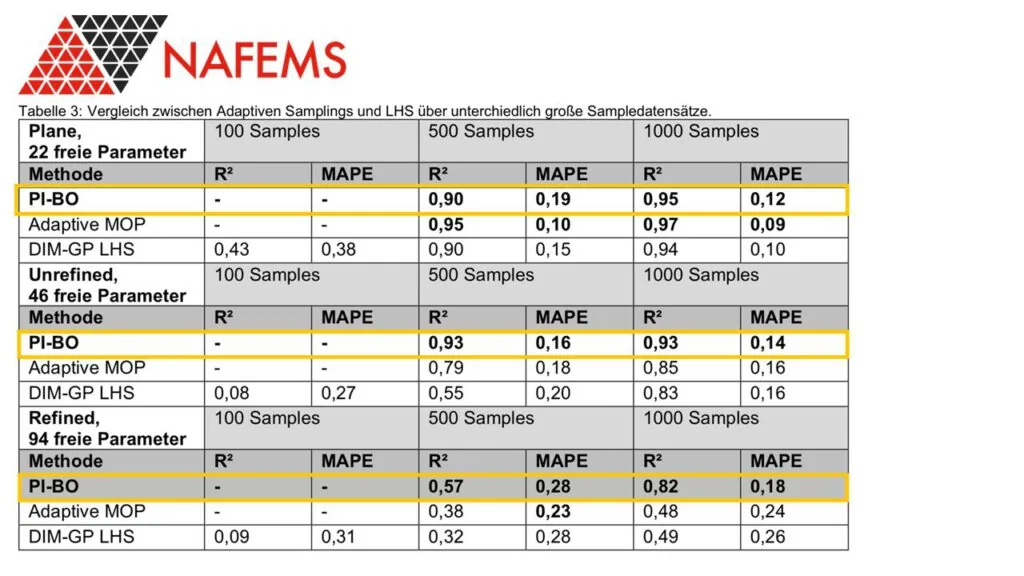
Named cases and third-party benchmarks, in trade press and at NAFEMS. Each links to the full story.
STOCHOS learns a surrogate model from existing solver data, then predicts results for new parameters or geometries in seconds. Fast, uncertainty-aware predictions let you explore many more variants than the solver alone could cover, and the full simulation returns only for the designs you shortlist.
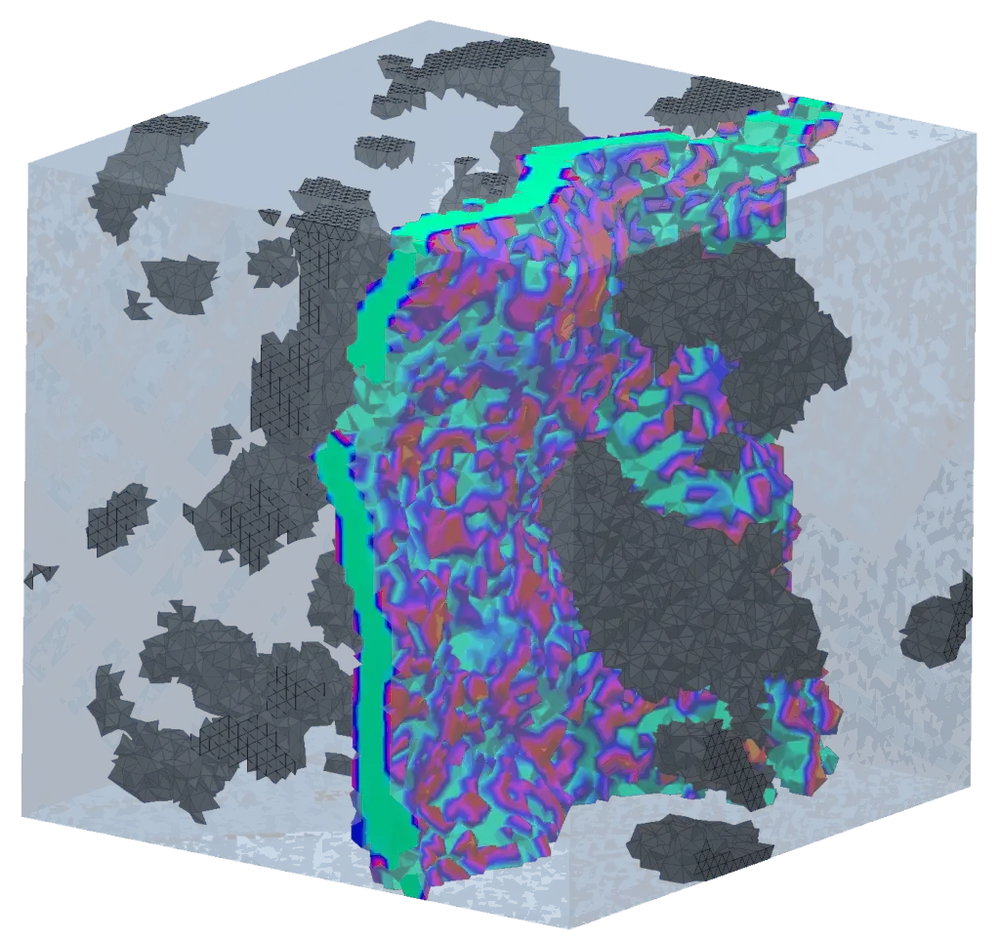
Yes. STOCHOS handles 2D and 3D fields from CFD and FEM, as well as scalars, signals, meshes, and geometries. It can predict spatially resolved outputs for new parameter combinations, so you see more than a single KPI when comparing designs. Confidence is attached to every prediction, field or scalar.
PI Probaligence is an official Ansys Technology Partner. STOCHOS Flow reads Ansys Workbench parameters and calls the Ansys Solver nodes for selective validation, so fast surrogate prediction connects to the solver workflows engineering teams already use. New solver results feed back into training, and the surrogate improves inside the Workbench setup your team runs today.
Less than most machine-learning tools, and there is no fixed minimum. DIM-GP is designed for small, expensive datasets, so teams usually start from existing solver runs: tens to low hundreds, not thousands. Above roughly a thousand samples, cheaper methods start to make more sense than a Gaussian process. How many you need depends on the physics, the number of parameters, and the outputs, and quantified uncertainty shows where the model is reliable and where more runs are worth adding.