

From your data to the DIM-GP engine
Your data goes in, the model learns the relationships, and every prediction comes back with a confidence.
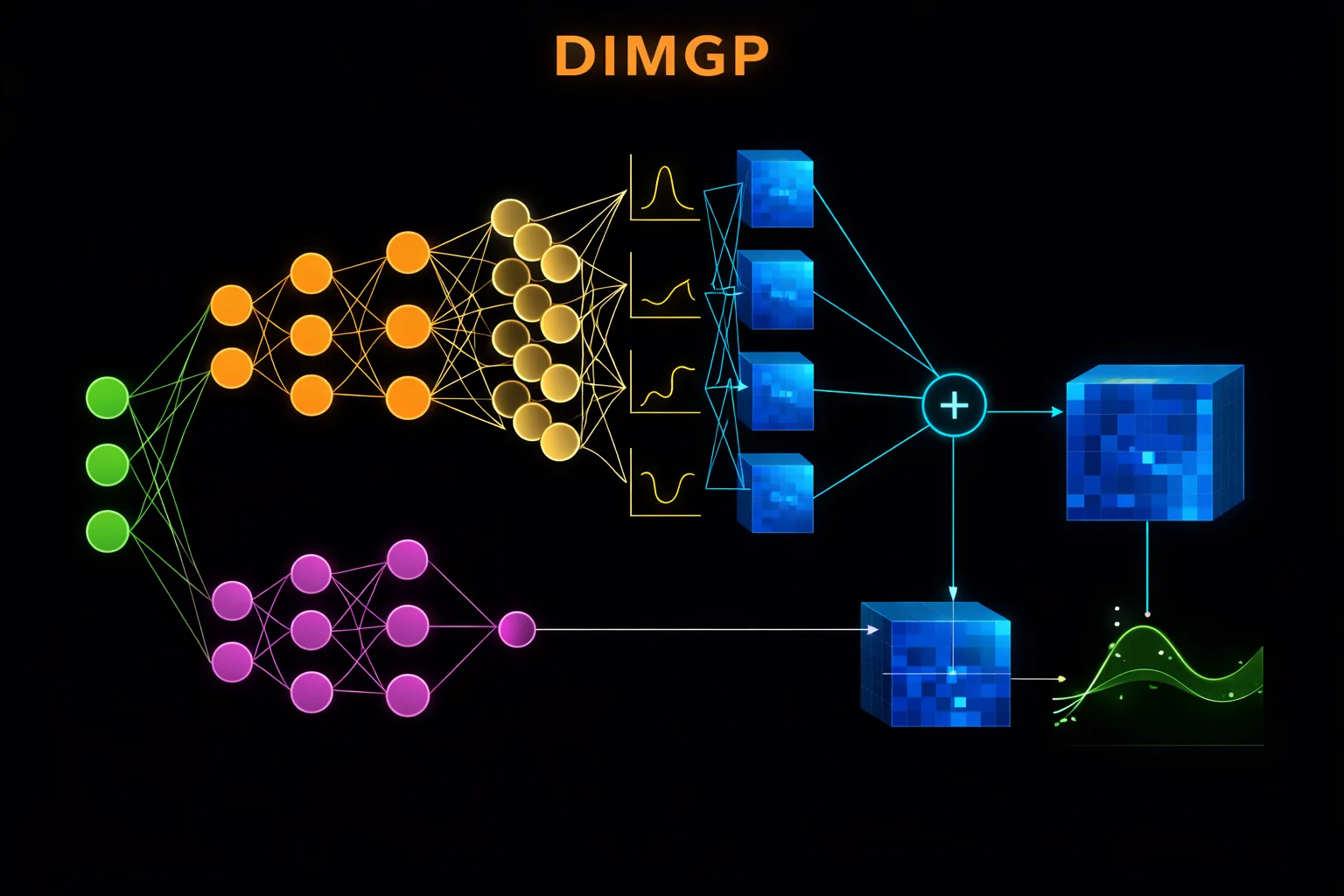
The pattern recognition of deep learning, the uncertainty estimation of Gaussian processes, one model built for small, noisy datasets.
Read the full DIM-GP explanation →Built for real engineering and R&D data
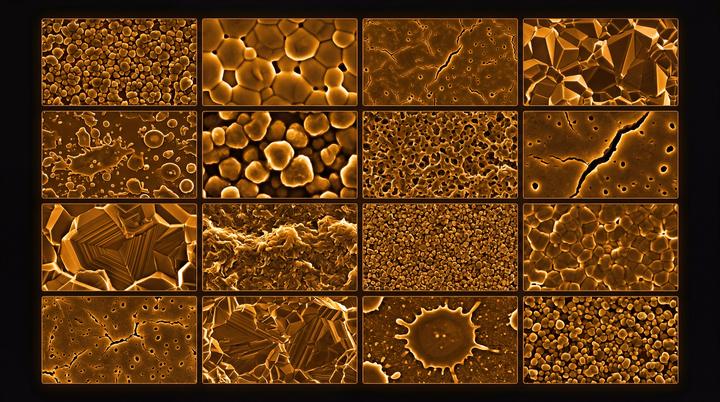
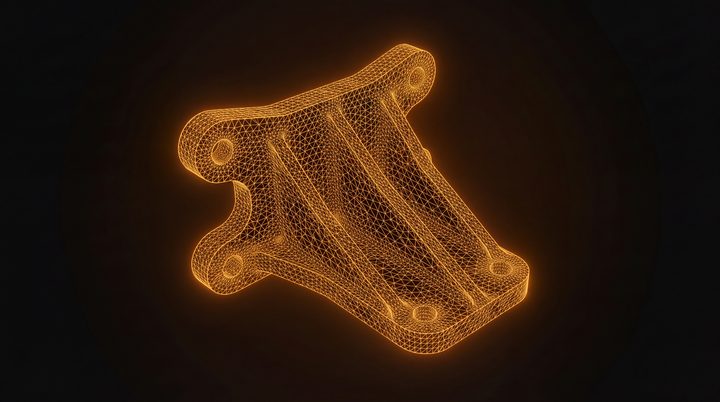
One probabilistic method spans engineering, chemistry, and formulation data that usually needs several separate tools.




One intelligence layer, six decision tools

Train and predict with an AI model in 4 lines of code
STOCHOS is a Python library, not a black box. Fit on small, noisy data, then predict with a confidence interval.
Sits alongside NumPy, pandas, PyTorch, Jupyter, and your solver scripts.
Script sweeps, batch jobs, and validation so results are repeatable.
Runs on your own infrastructure and installs offline. Cloud is optional, never required.
Your AI workflow is just one prompt away
Tell the Workflow Agent what you need and it builds the workflow for you. Plug in the tools you already use, adjust any step, rerun on new data. STOCHOS does the predicting underneath.
Explore STOCHOS Flow →Give the optimizer a problem and see how close your own best try lands. Take the challenge
Common questions
01What is a surrogate model?
A surrogate model is a data-driven approximation of an expensive simulation or experiment. It learns the relationship between inputs and outputs from data you already have, then predicts results for new variants in seconds instead of rerunning the full solve or test each time.
02What is uncertainty quantification?
Uncertainty quantification reports how confident a model is in each prediction. Instead of one point value, you get a value and a measure of its reliability. This lets engineers trust predictions inside the data range and run a full validation only where confidence is low.
03What algorithm does STOCHOS use?
DIM-GP, a Deep Infinite Mixture of Gaussian Processes, is the core STOCHOS algorithm. It combines neural networks and Gaussian processes into a non-stationary, probabilistic model designed for small, noisy datasets, changing geometries and meshes, and multi-fidelity data, without manual hyperparameter tuning.
04What data types does STOCHOS support?
STOCHOS works with scalar and tabular data, signals and time series, 2D and 3D fields from CFD and FEM, particle and transient simulation results, graphs and meshes, geometries and point clouds, images, and multi-fidelity data. This breadth lets one approach cover engineering, chemistry, and formulation problems.
05What hardware does STOCHOS need?
A normal workstation, not a server. Core modelling, optimization, and sensitivity run on a modern CPU with about 16 GB RAM, and core modelling trains in minutes on a laptop. Datasets larger than memory train out of core, straight from disk.