


The problem with a point prediction
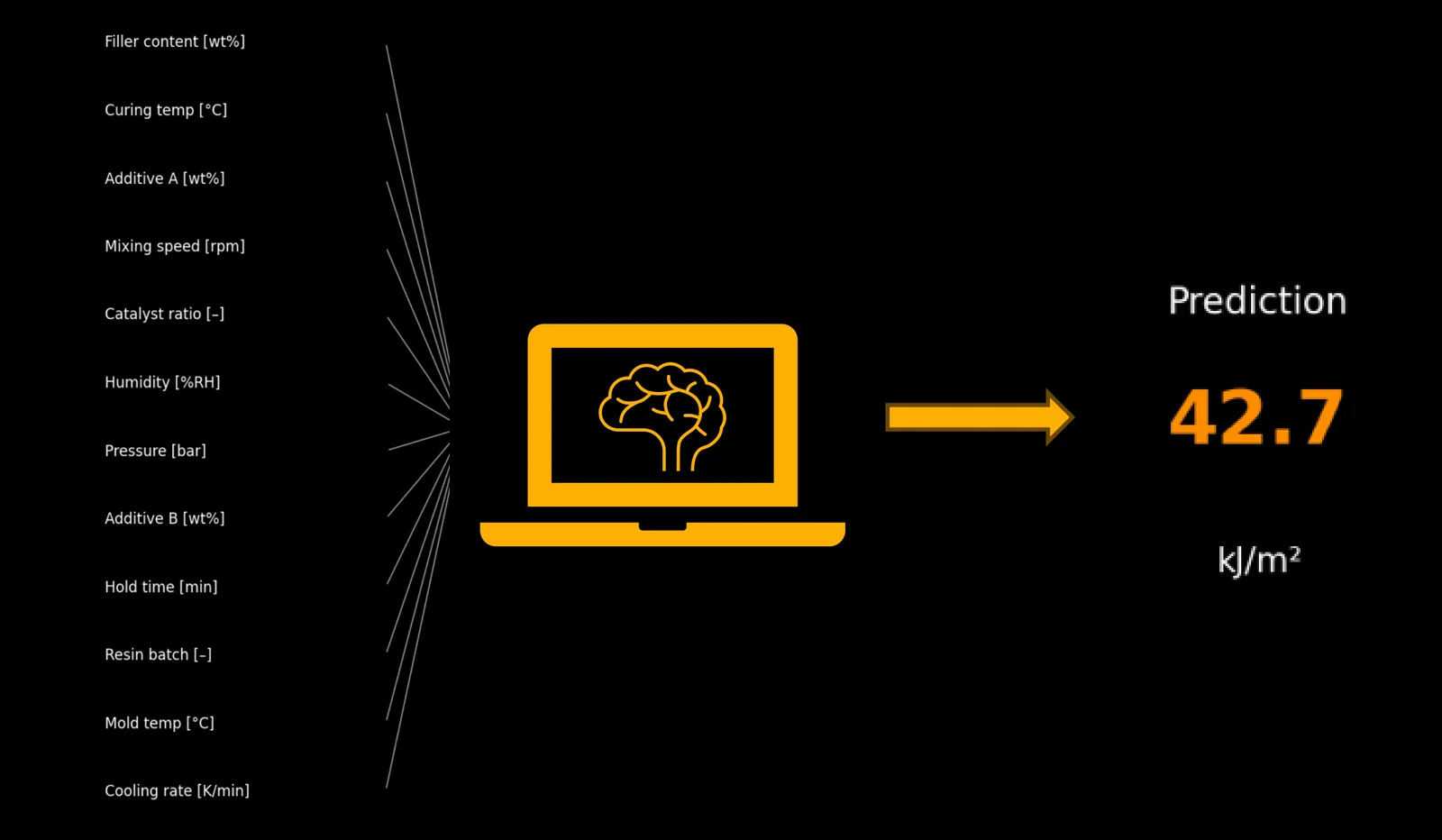
A model will answer any question you ask it, including questions about designs nothing in its training data resembles, and a bare number gives you no way to tell those two cases apart.
Both answers arrive in the same format, to the same decimal place, with the same apparent authority. One is an interpolation between cases the model has seen many times. The other is an extrapolation into territory it has never been shown.
Nothing in the output separates the two, so the risk does not disappear. It moves to whoever signs the release, who now has to judge the model without any information from it.
What quantified uncertainty actually reports
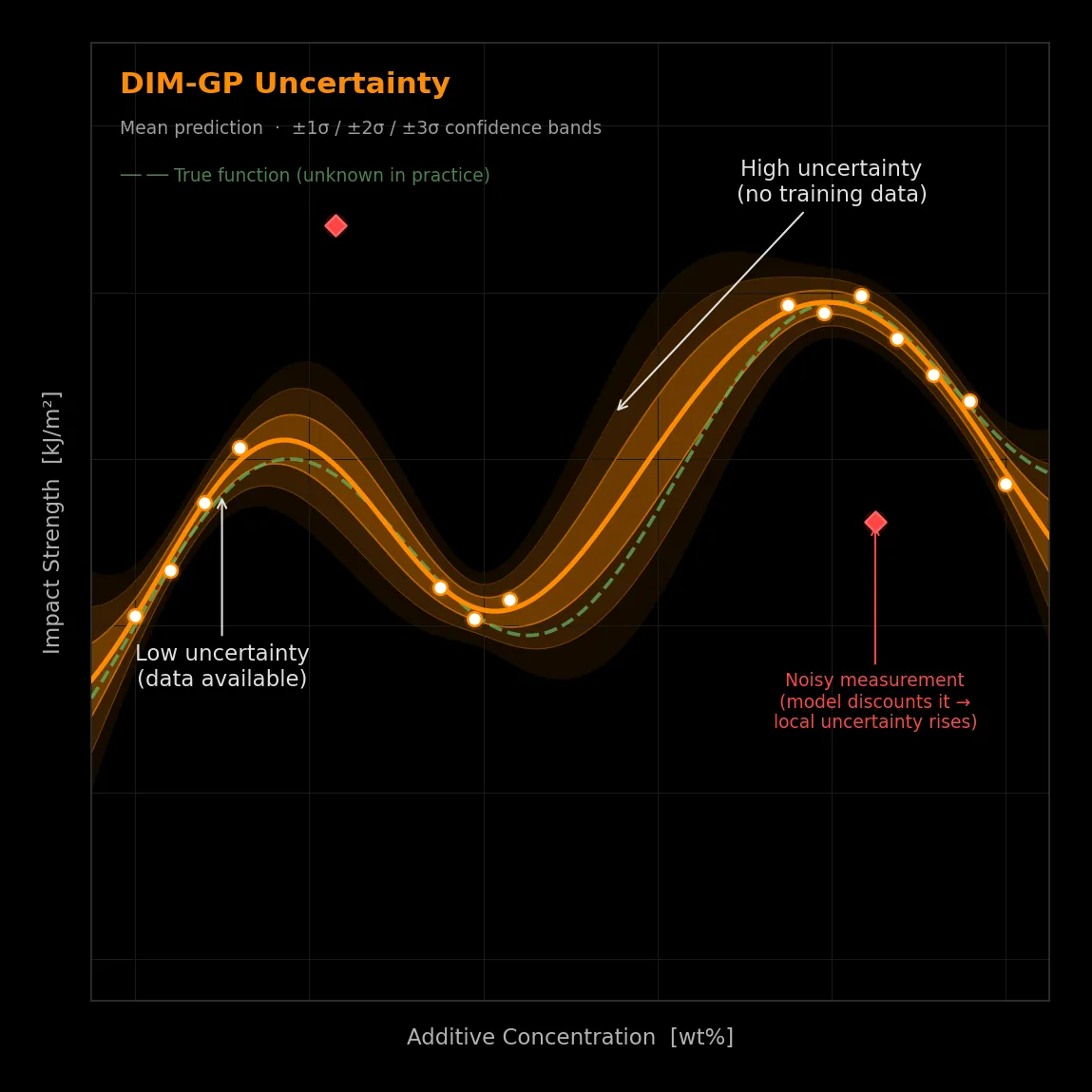
Alongside the predicted value you get a confidence range that widens where the model has seen little relevant data, which is the signal you use to decide.
Where your data is dense the range stays tight, and the model is telling you it has handled this kind of case before. Where the range opens out it is telling you the opposite, without anyone having to guess which region a candidate fell into.
That makes the output a two-part answer: the estimate, and how much weight it will carry in a review. Uncertainty Quantification covers the two kinds of uncertainty behind that range.
The range means something. It reports how consistent the model is where it has evidence.
The range widens and the honest reading is that the model has left the ground it was trained on. Run the solver.
Where the boundary sits
Confidence is only meaningful inside the domain the model was trained on, so a design far outside that range is a signal to run the solver, not to trust the number.
It is worth being exact about what confidence claims. It says the model is consistent where it has data. It does not say the answer is proven correct, and no range replaces the validation that confirms a design.
STOCHOS is a predictive model that sits alongside your solver, not in place of it. Used that way, a surrogate model narrows what needs a full run, and the runs you do keep are the ones that decide something.
Common questions
01Does high confidence mean the prediction is correct?
It means the model has seen enough relevant data to be consistent there. Validation against the solver is still what confirms a design.
02What happens outside the training domain?
The range widens, which is the model telling you it is extrapolating. Treat that as a prompt to run the full simulation.
03Does uncertainty slow anything down?
No. With STOCHOS the confidence range is produced together with the prediction, not as a second pass, so there is nothing extra to run.