

A number with no measure of trust
Scroll sideways to read the labels.
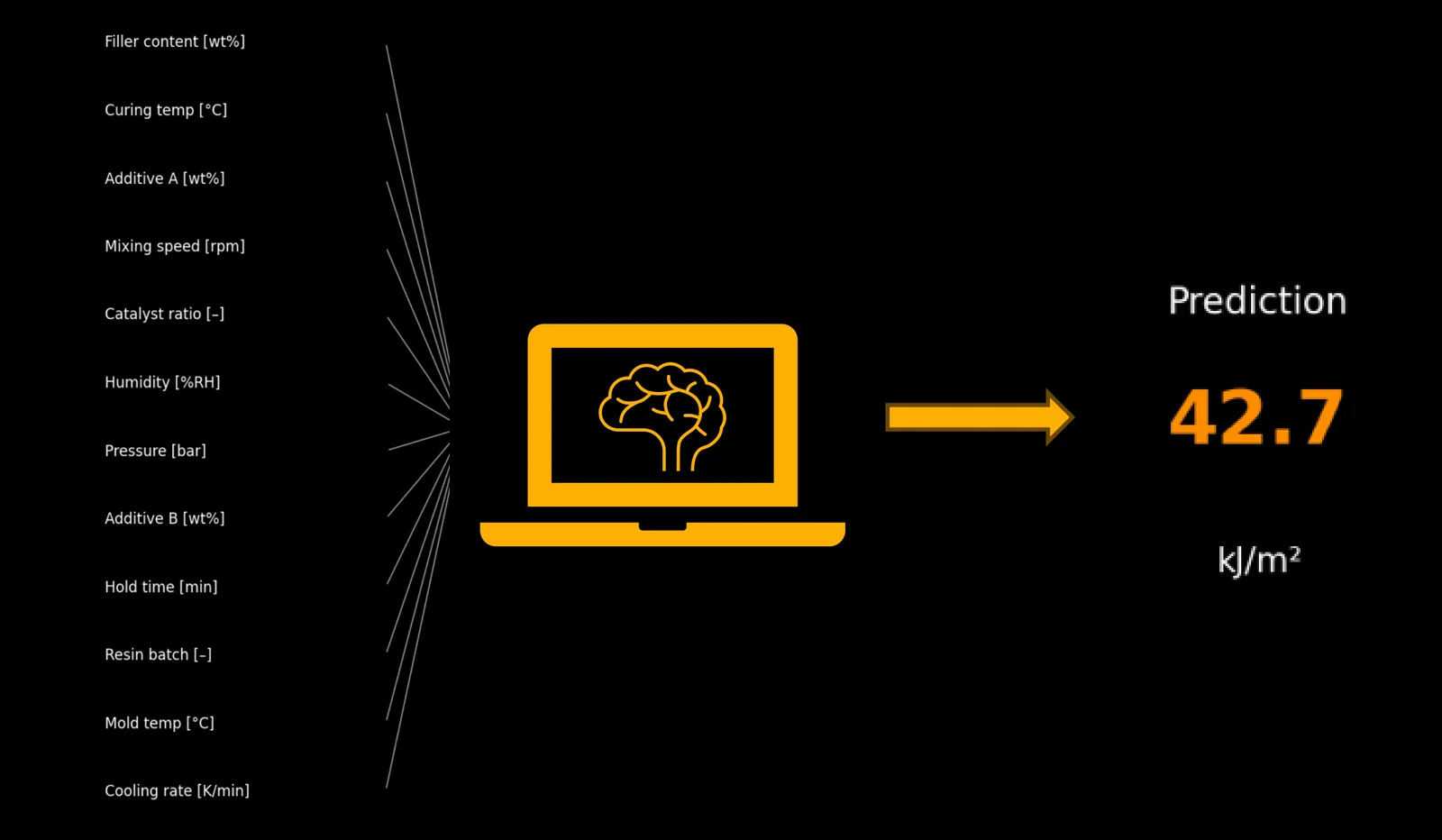
Feed a model twelve settings and it returns one number: 42.7. Two predictions can read the same and mean opposite things. One sits inside the data the model has already seen. One lands far outside it. The bare number hides the difference.
A single value implies a precision that is not there. A forecast that gives a 70 percent chance of rain is more useful than a flat yes. Uncertainty quantification opens the box the same way: every prediction arrives with a measure of how far to trust it.
One value, no measure of trust. It reads the same whether the model is confident or guessing.
The true value lies between 39.1 and 46.3 with 90 percent confidence. The same estimate, plus how far to trust it.
Illustrative numbers, shown to contrast output formats. Not a STOCHOS performance claim.
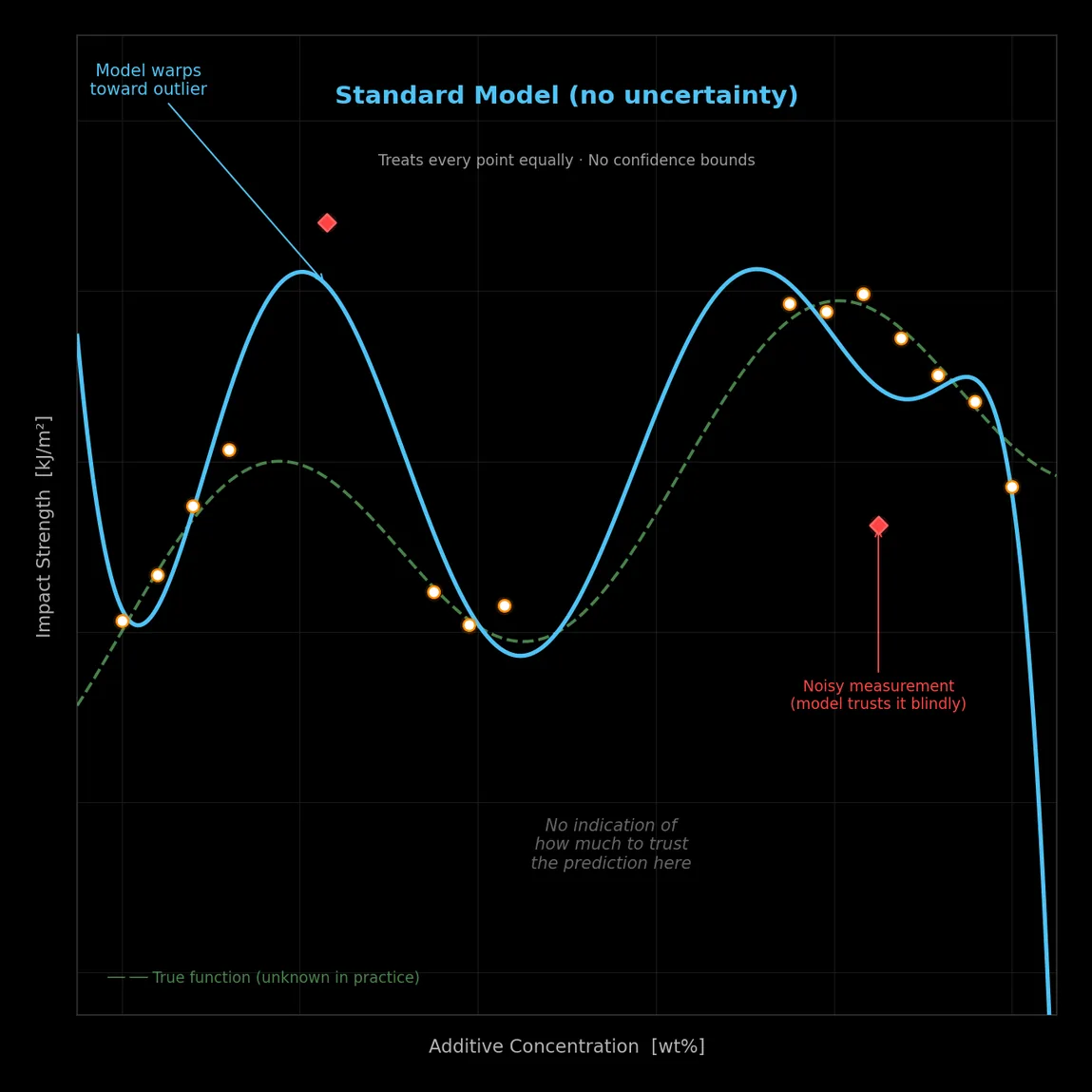
Trusting the box blindly
STOCHOS returns confidence bounds on every prediction. Engineers read that confidence map to decide which variants still need a full solve, instead of validating every candidate or trusting them all.
Scroll sideways to read the labels.
Why a prediction needs a range
Not all uncertainty is the same. Splitting it in two tells you what to do next.
Run the same experiment twice and results still scatter: material batches, sensor error, process drift. This noise lives in the system itself. More data will not remove it, so you plan around it.
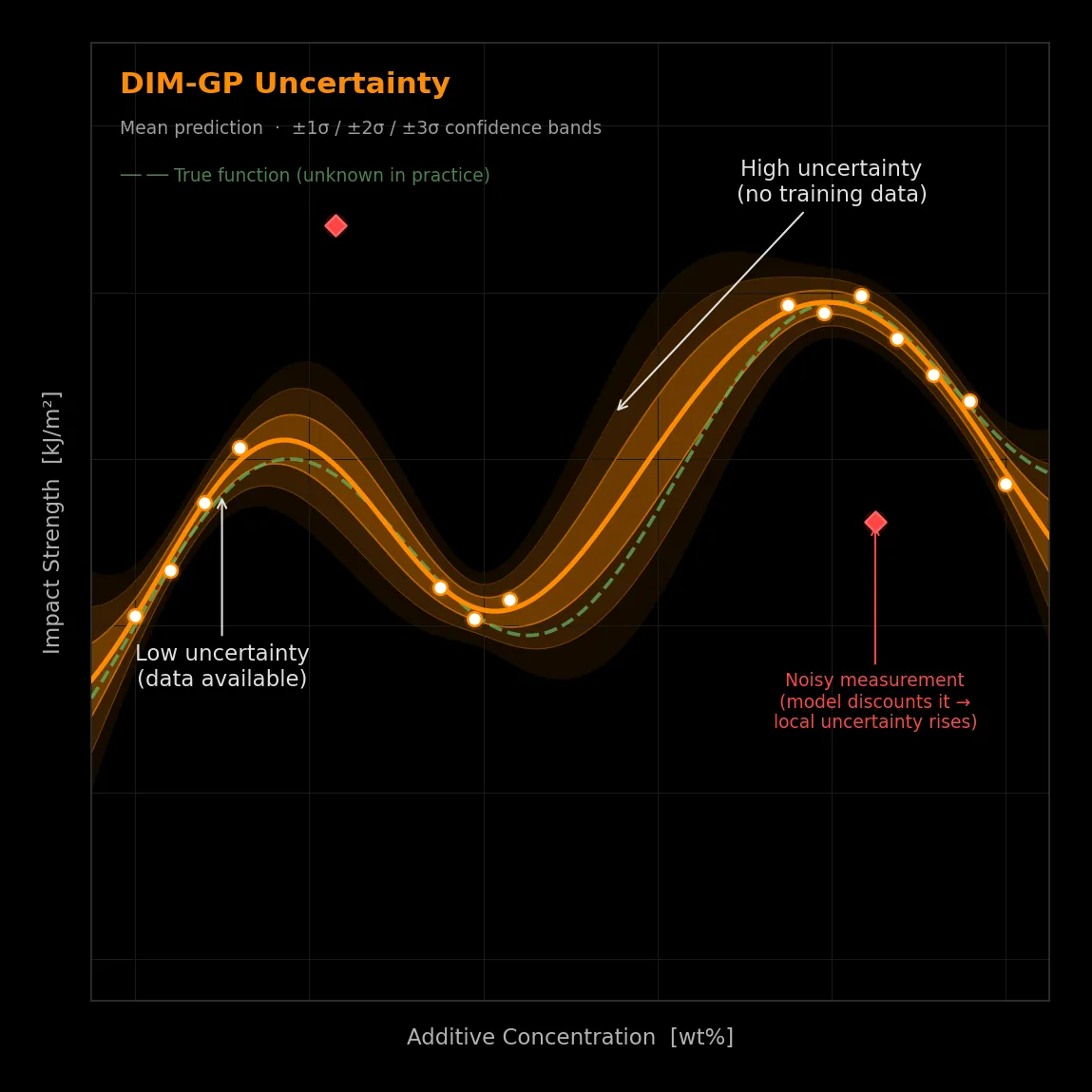
The model is least sure where it has seen little data. Confidence stays tight inside the tested range and widens as the model extrapolates past it. That gap is the line between a safe interpolation and a risky guess, and more data shrinks it.
STOCHOS is probabilistic at its core. The DIM-GP model returns a predicted value together with confidence, separating reliable interpolation from risky extrapolation and flagging where data is sparse. How the DIM-GP algorithm works →
What a range buys you
Quantified uncertainty is not statistical tidiness. It changes the decision in front of you.
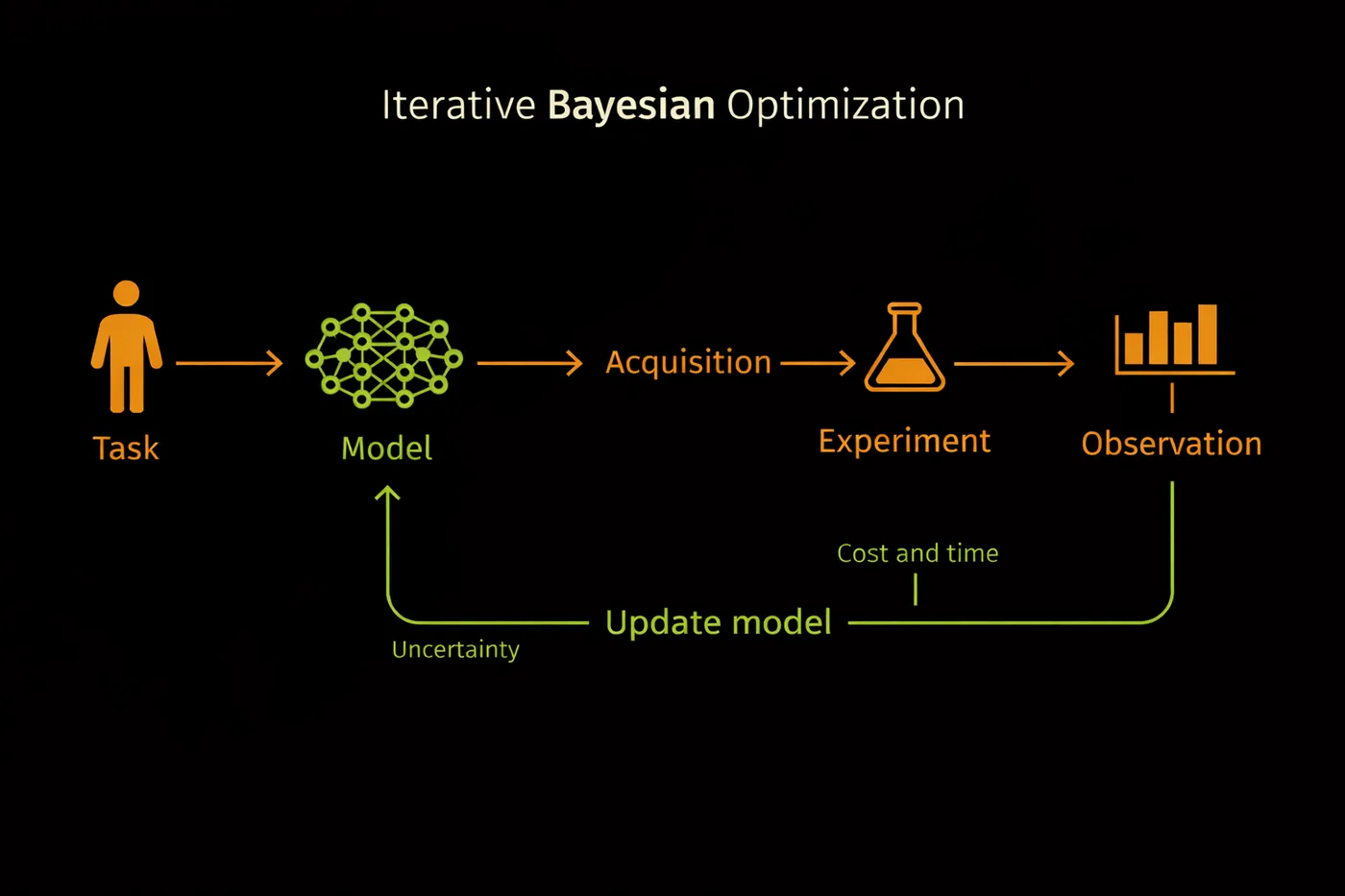
Uncertainty is also what powers Bayesian optimization, and it turns a surrogate model into a decision you can defend.
- Know when your model is guessingRead the confidence range before you act on a result.
- When can you trust an AI prediction?What a confidence range does and does not tell you.
- AI for EngineeringWhere this fits in CFD, FEM, and CAE work.
- CADFEM Conference 2024 AustriaAn event note on confidence levels in practice.
- The science behind STOCHOSThe research the method is built on.
Common questions
01What is the difference between aleatoric and epistemic uncertainty?
Aleatoric uncertainty is noise in the system itself, like batch-to-batch variation or sensor error. More data will not remove it, so you plan around it. Epistemic uncertainty is the model's own lack of knowledge, largest where it has seen little data. More data or a better model can reduce it.
02Does a 90 percent range mean a 90 percent chance the truth is inside it?
Only if the range is calibrated. Calibration means that over many predictions, the true value really falls inside the stated range about that often. A range that is never checked can be overconfident, so calibration should be validated on held-out data.
03What is the difference between accuracy and uncertainty?
Accuracy is how close a prediction is to the truth on cases you can check. Uncertainty is the model's own estimate of how far to trust a prediction, including on new cases you have not checked. A useful model reports both, so you know not just the answer but how much to rely on it.
04Does uncertainty quantification slow the model down?
No. With STOCHOS, confidence is part of the probabilistic prediction rather than a separate, costly step. You get the value and its reliability together, in seconds, which is what makes selective validation practical.
05What is uncertainty quantification?
Uncertainty quantification means reporting how reliable each prediction is. A probabilistic model such as STOCHOS returns a value together with a confidence range, so you can see where it interpolates on solid data and where it extrapolates. Low-confidence cases get full validation first, so you know where to spend the checking effort.