
Case study · June 6, 2025

High Fidelity Digital Twins Using AI

PI Probaligence, SGL Carbon, and DLR demonstrated a more efficient approach to multi-scale composite simulation in June 2025, reducing computation time from months to a few minutes with STOCHOS.

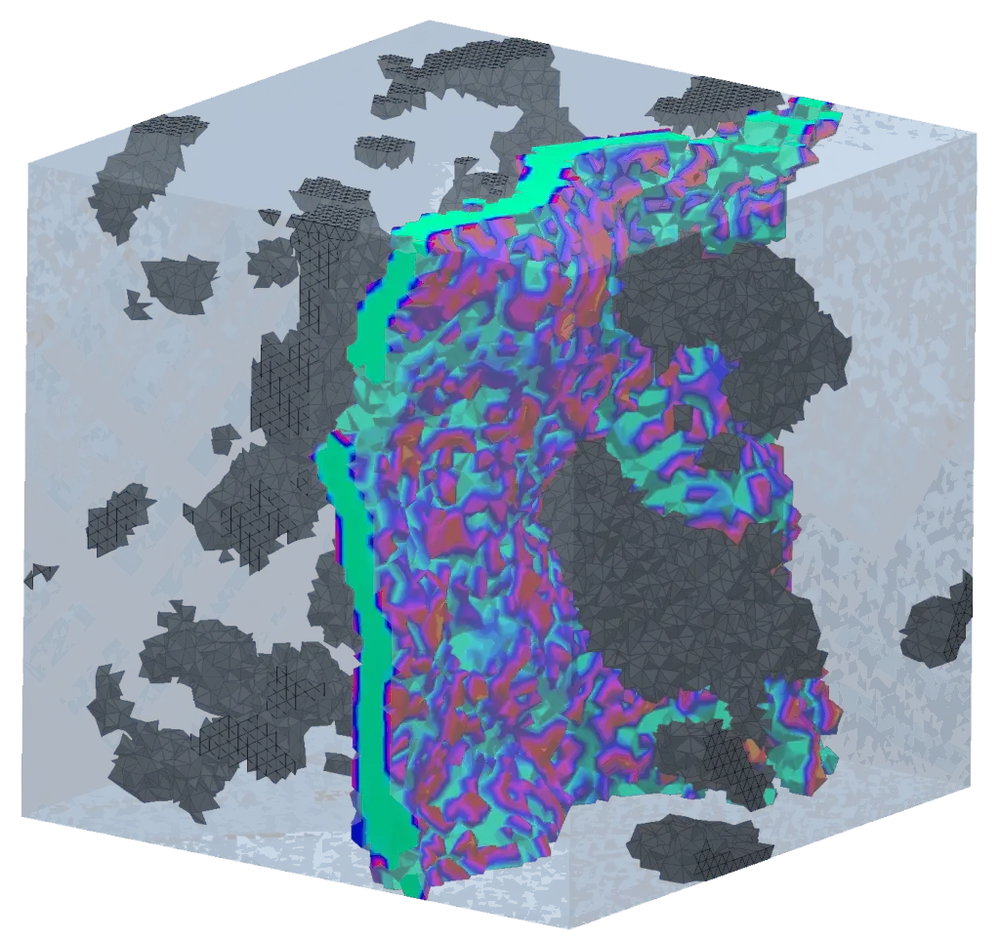
Cube-shaped 3D model of a CT-scanned composite microstructure with a color-coded simulation slice cutting through gray inclusions
CT-based digitalization of the microscale structure

The project covers AI-based fatigue and life cycle analysis of complex materials. Starting with CT-based digitalization of the microscale structure, we used our probabilistic ML software STOCHOS to create generalized material models. These models are then integrated into macro-level FEM simulations to predict part behavior with high fidelity.

Where conventional FE² methods typically require several months up to a year of computation time, the ML-based solution reduces this to just a few minutes, with no compromise in predictive quality.

This advancement enables more efficient simulation workflows and supports faster, data-driven decision-making in composite part design.
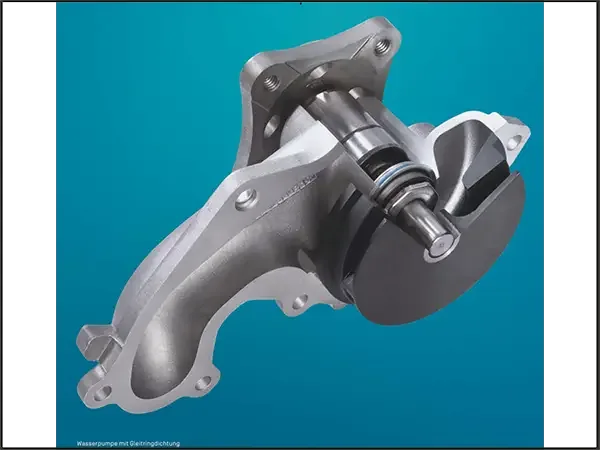

Metal water pump with mechanical seal shown against a teal background
Water pump with mechanical seal
The simulated test piece, a silent loop of about eight seconds.
Next step
Solution
AI for Engineering

Where this fits in CFD, FEM, and CAE work.

Guide
Predict a full field, not a single number

Keep the spatial answer across the geometry.

Interactive demo
Try to beat STOCHOS

Three use cases, about two minutes each.

NewerNew Office in the CADFEM Building OlderCase study: multifidelity analysis of a traversed ind...

← All news and guides

Partners, customers, and research collaborators
AnsysCADFEMSimuTech GroupMEScoTSNEBoschZFGEMUDLRAdler LackeMankiewiczDuluxPlixxentFraunhoferHochschule NiederrheinFUELL Lab AutomationHumotionUniversitaet HamburgRobert Bosch Stiftung