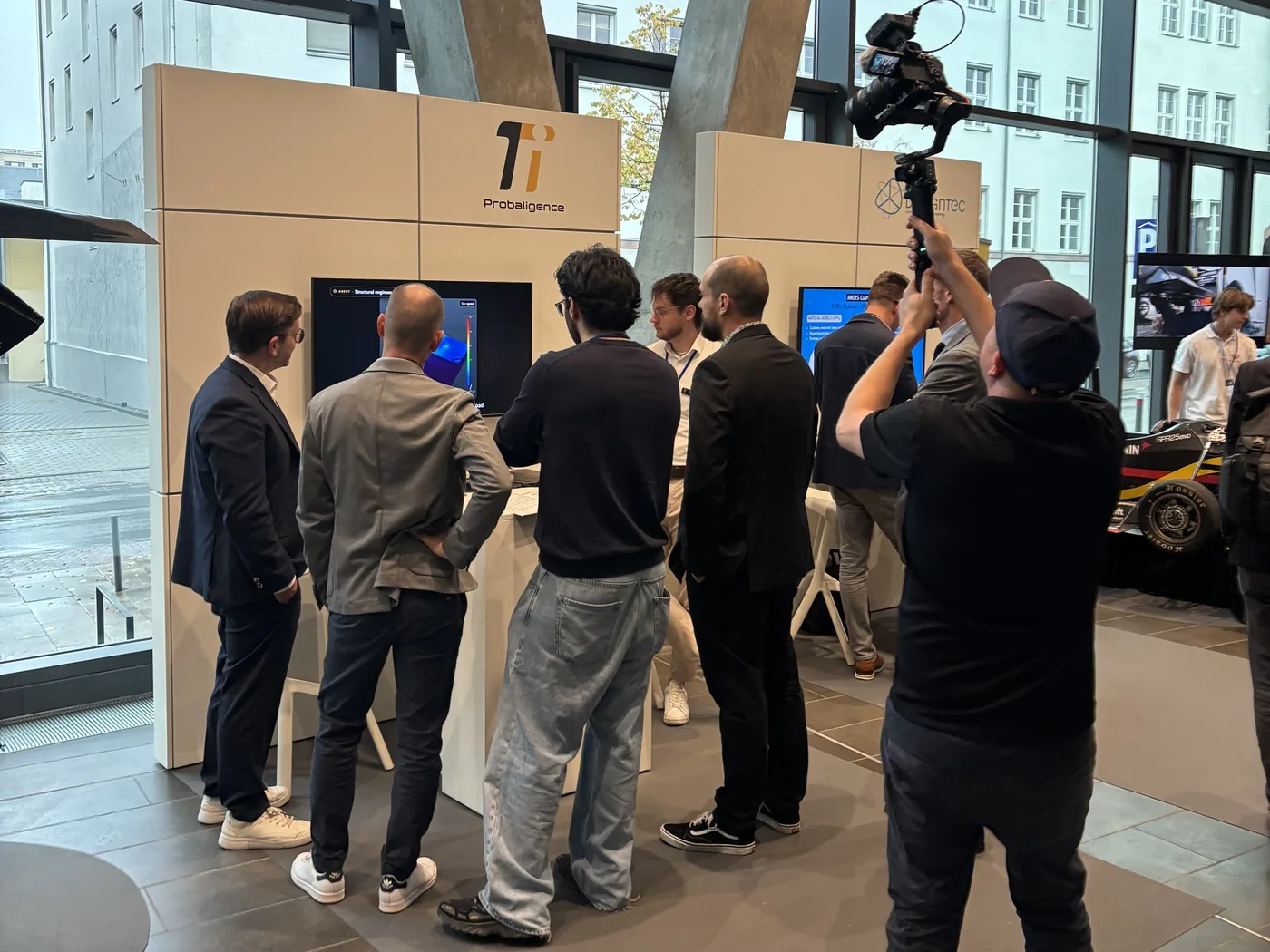
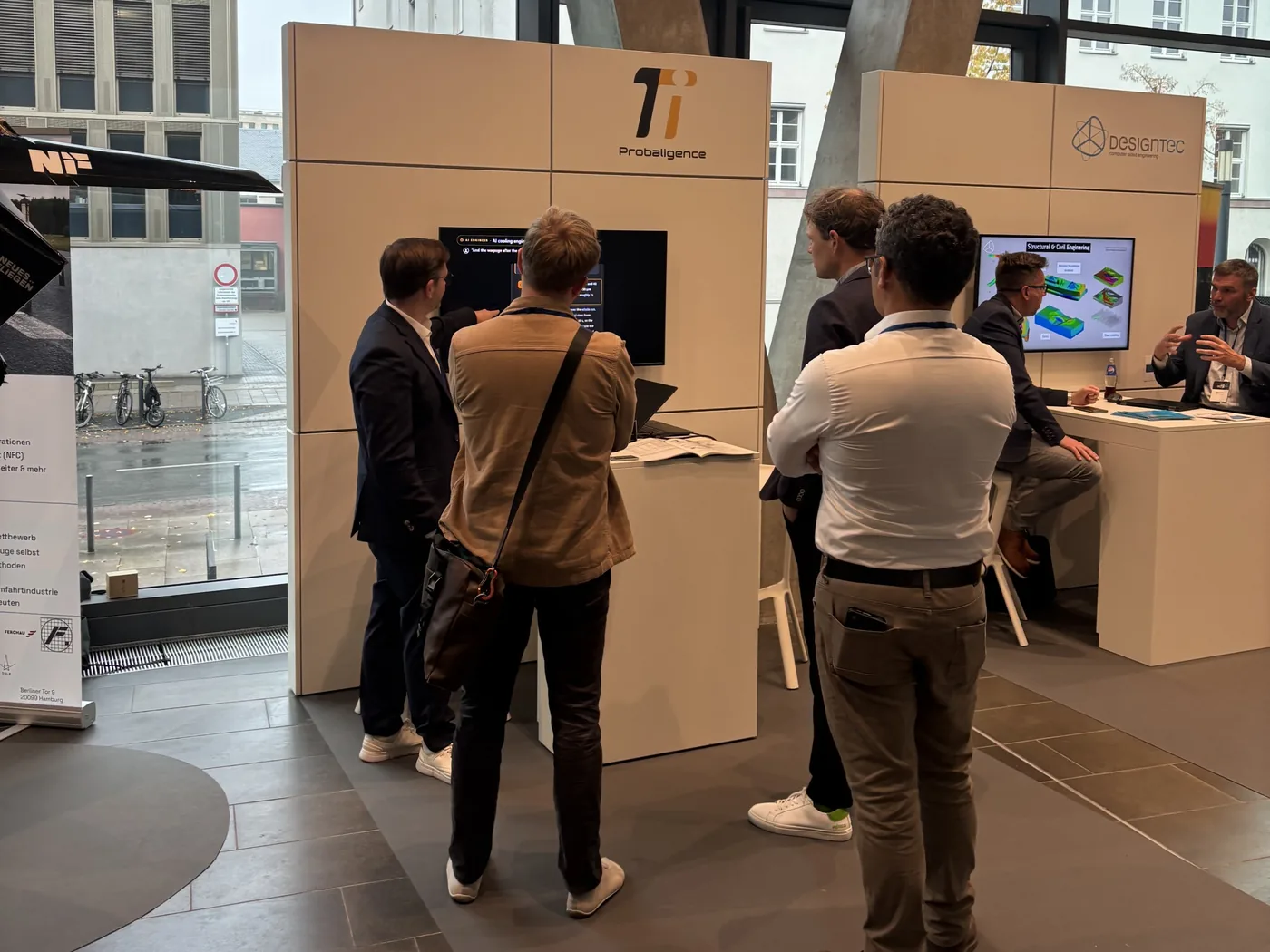
PI Probaligence exhibited as part of CADFEM Group. But STOCHOS did not only appear at our booth: it featured in the opening keynote and in two industry presentations, while our co-founder Dr. Kevin Cremanns led an AI deep dive during Meet the Developers.
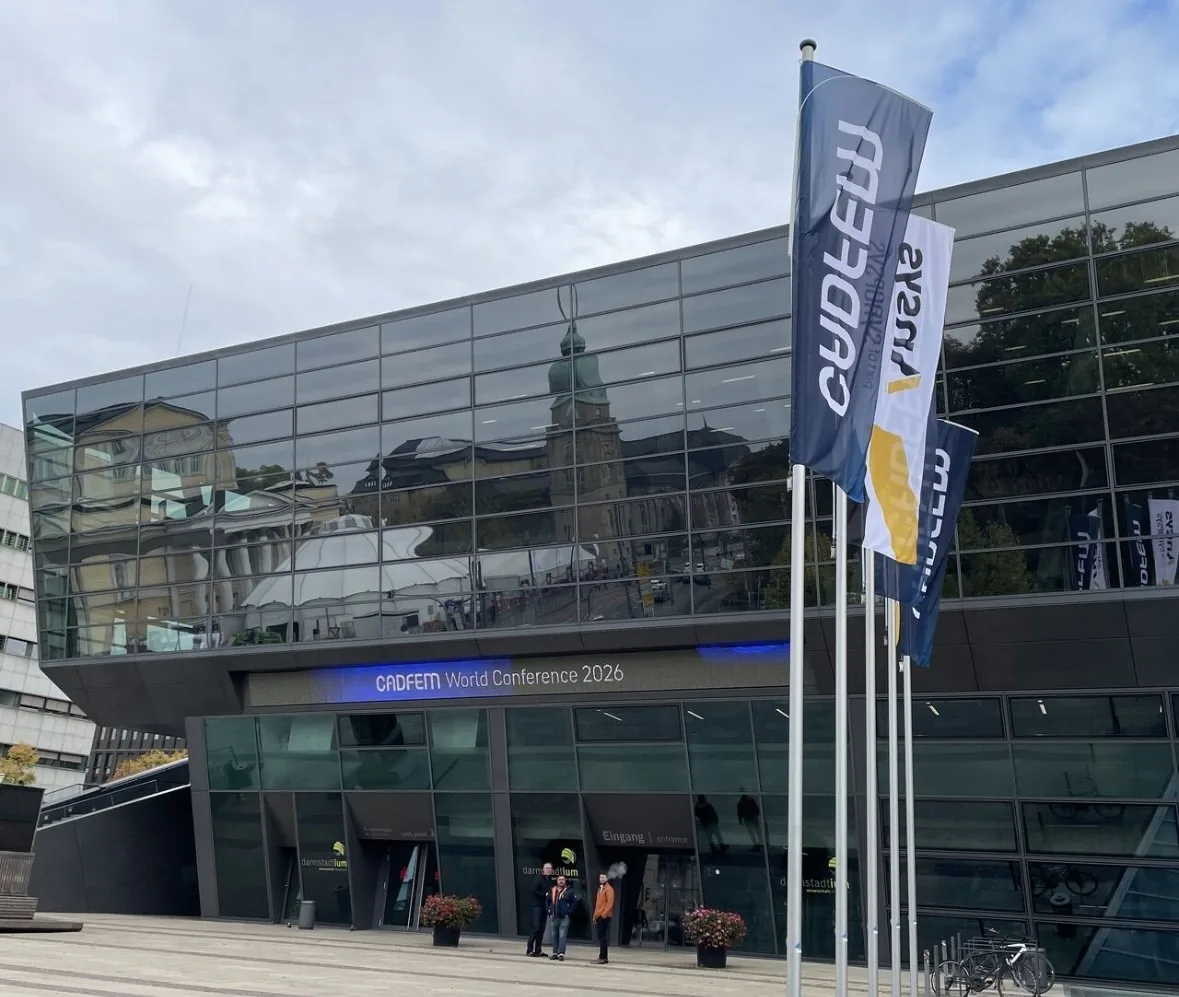
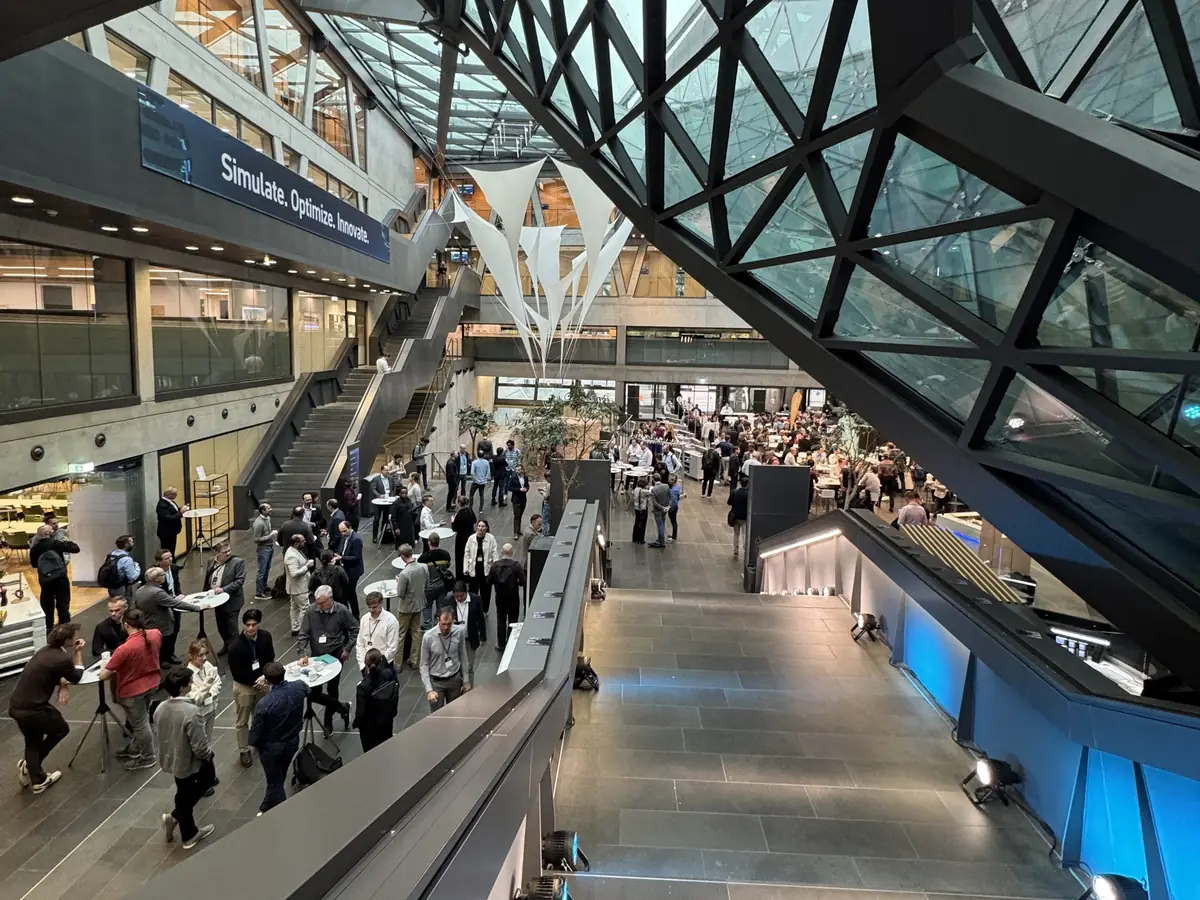
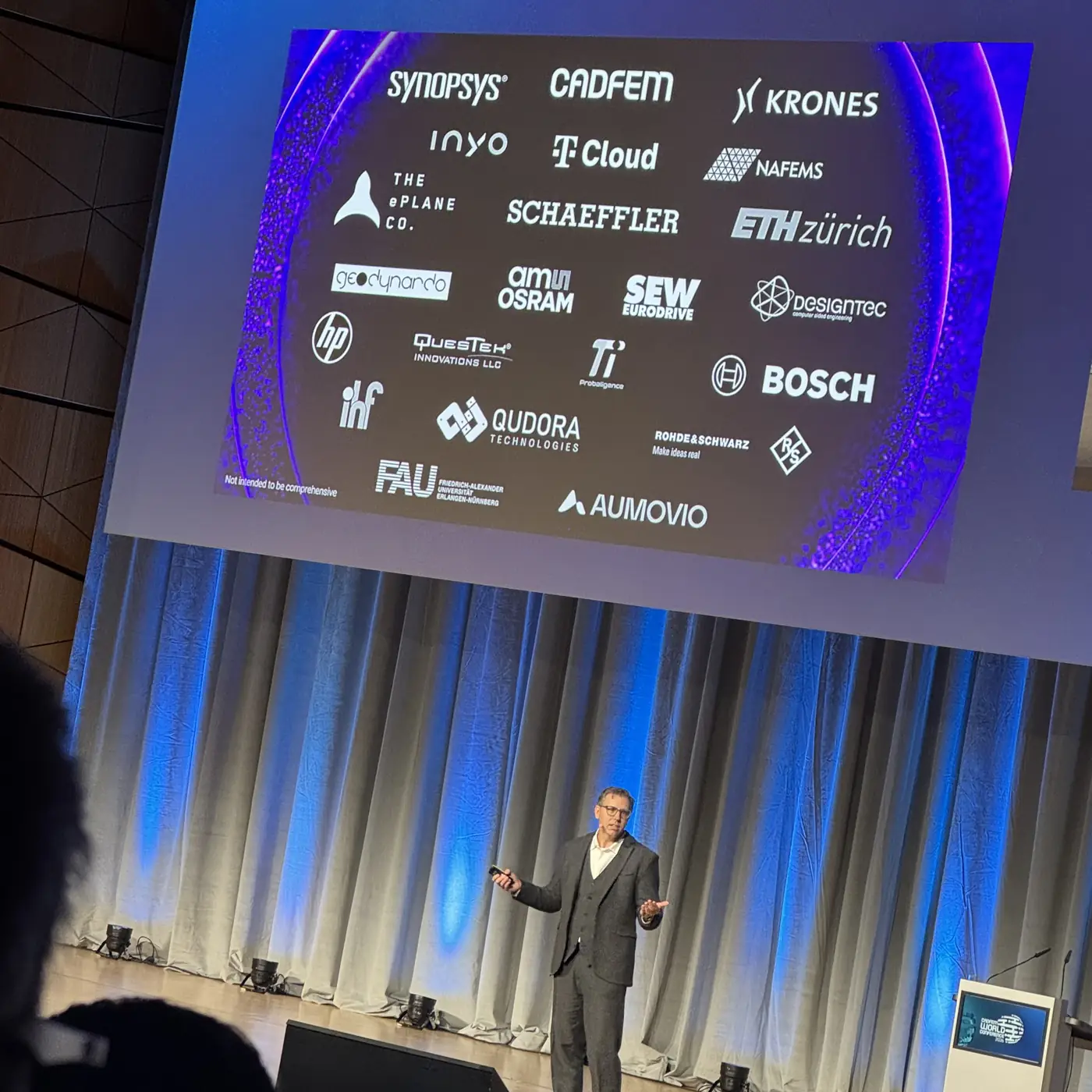
According to CADFEM's recap, the three days at the darmstadtium congress center brought together around 120 talks and workshops, keynotes from Synopsys, Bosch and The ePlane Company among others, and more than a dozen exhibitors from industry and universities.
STOCHOS in the opening keynote
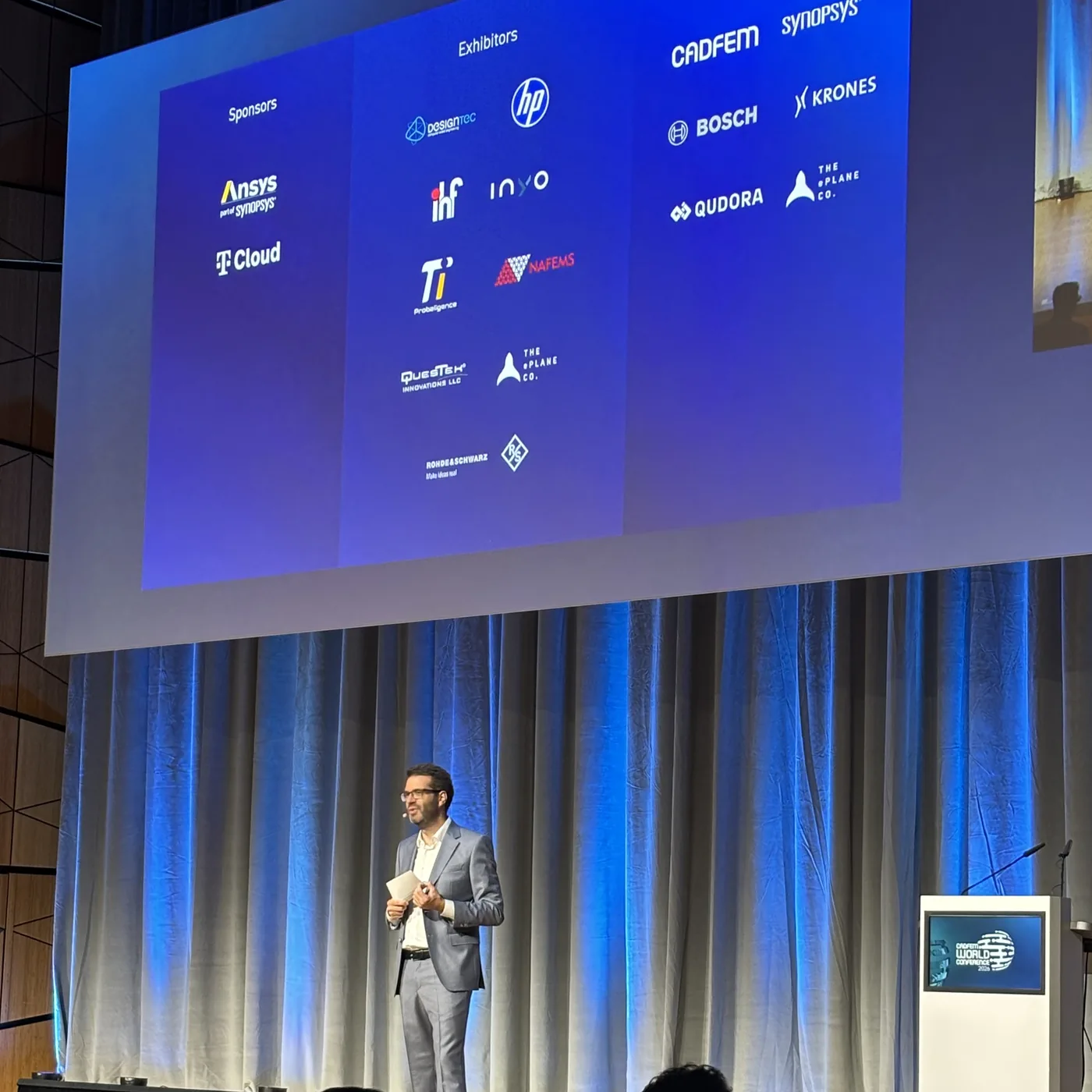
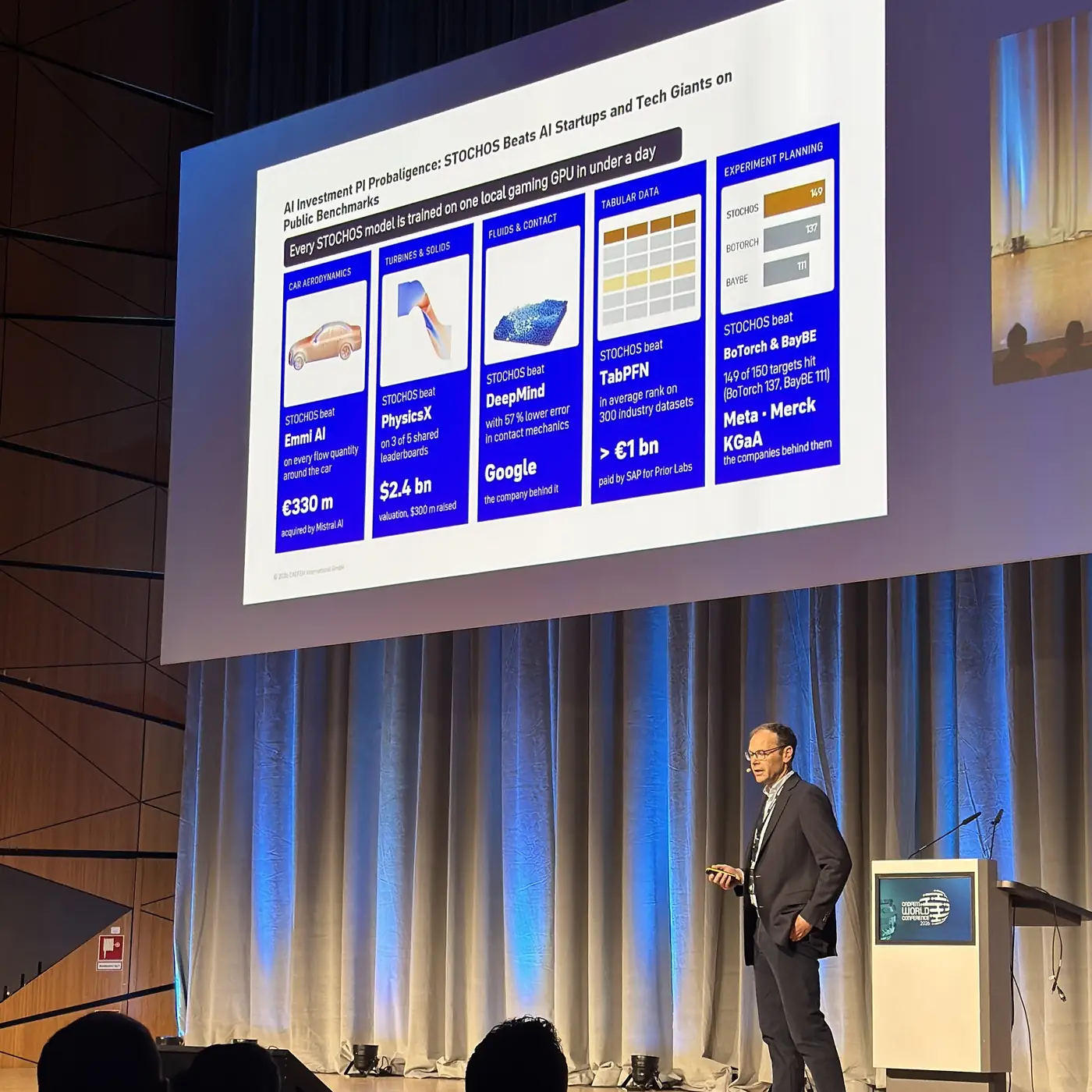
Christoph Müller, CEO of CADFEM International, presented PI Probaligence during the opening keynote on 21 October.
His presentation included results from STOCHOS engineering benchmarks. Our benchmarks page provides the underlying comparisons, protocols and results.
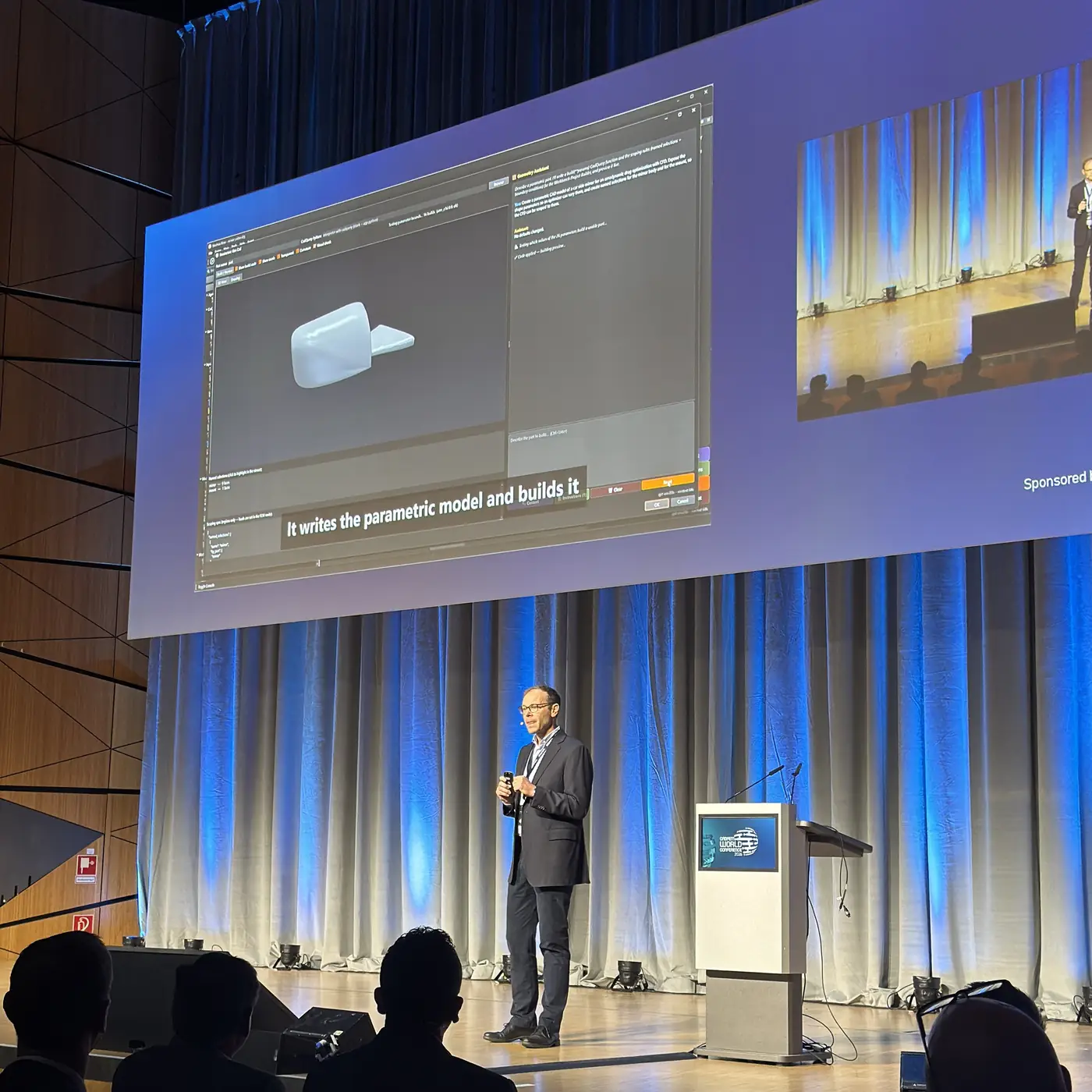
He also showed our CAD Agent demo: an AI agent turns a description of a car mirror into an editable parametric CAD model. The CAD Agent is part of the STOCHOS Flow roadmap and illustrates where we see agentic engineering workflows moving next.
STOCHOS in two industry applications
The following day, two technical presentations showed STOCHOS being used in the speakers' own engineering work.
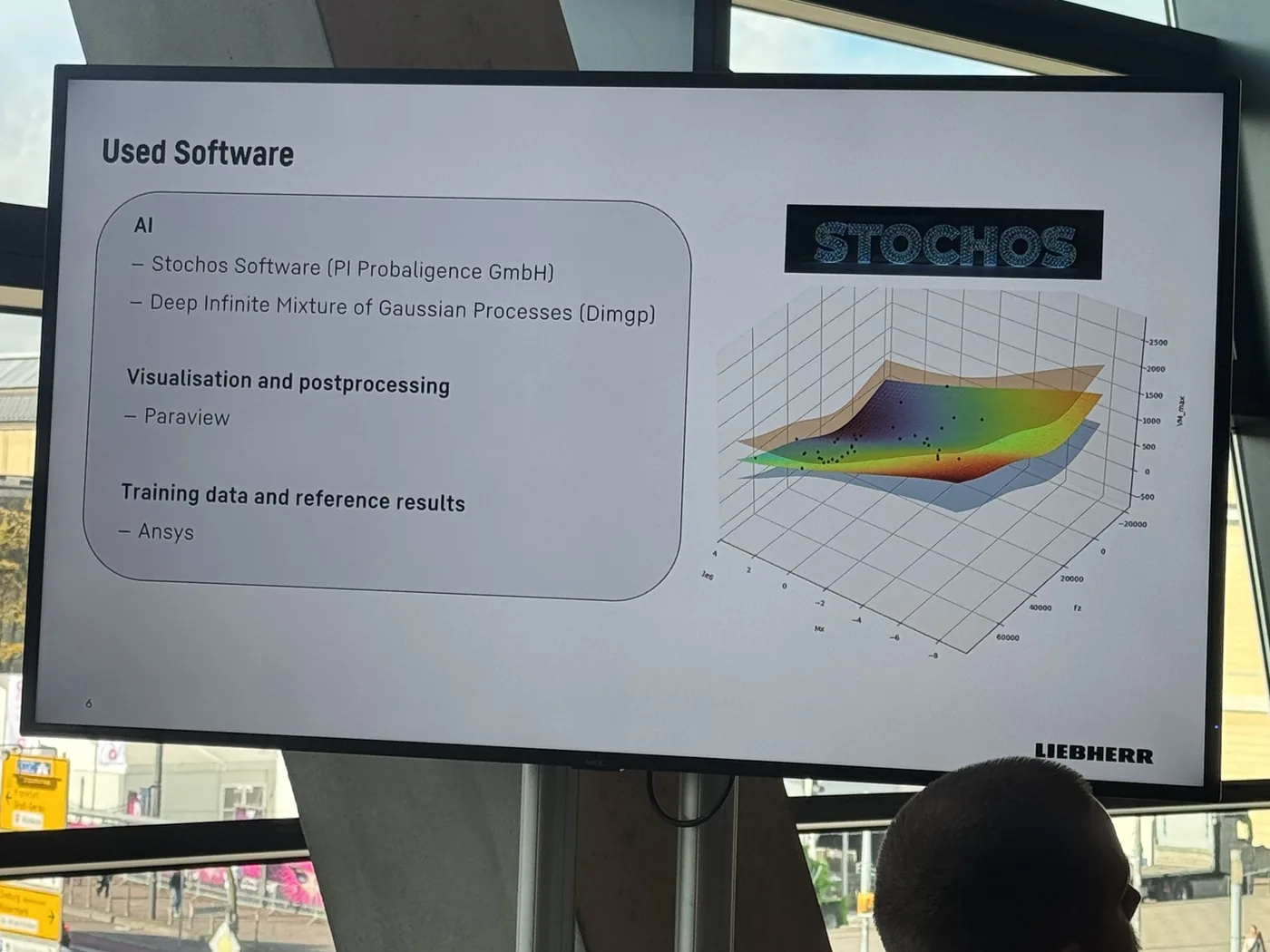
Liebherr-Aerospace presented an approach for predicting nodal stresses for landing gear fatigue using STOCHOS and its DIM-GP model family trained on simulation results.
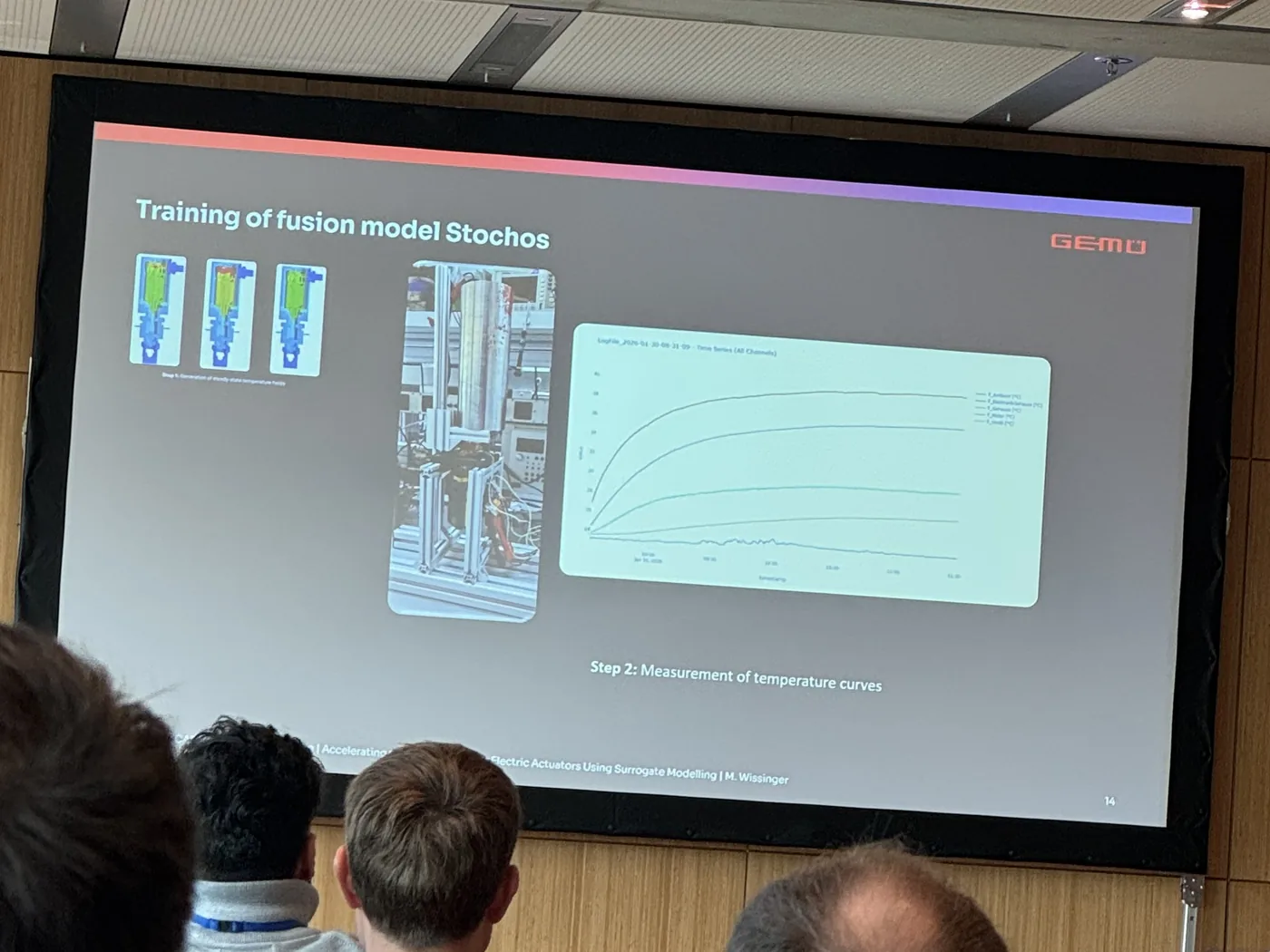
GEMÜ, which already uses STOCHOS in automated verification workflows, showed how surrogate models accelerate the development of electric actuators. Its STOCHOS fusion model combines simulated steady-state temperature fields with measured temperature curves.
Seeing STOCHOS not only at our own booth but inside engineering applications presented by industry users was one of the highlights of the conference for us.
Meet the Developers: an AI deep dive
CADFEM dedicated the opening day to Meet the Developers: seven interactive sessions in which engineers could discuss their questions directly with developers and experts.
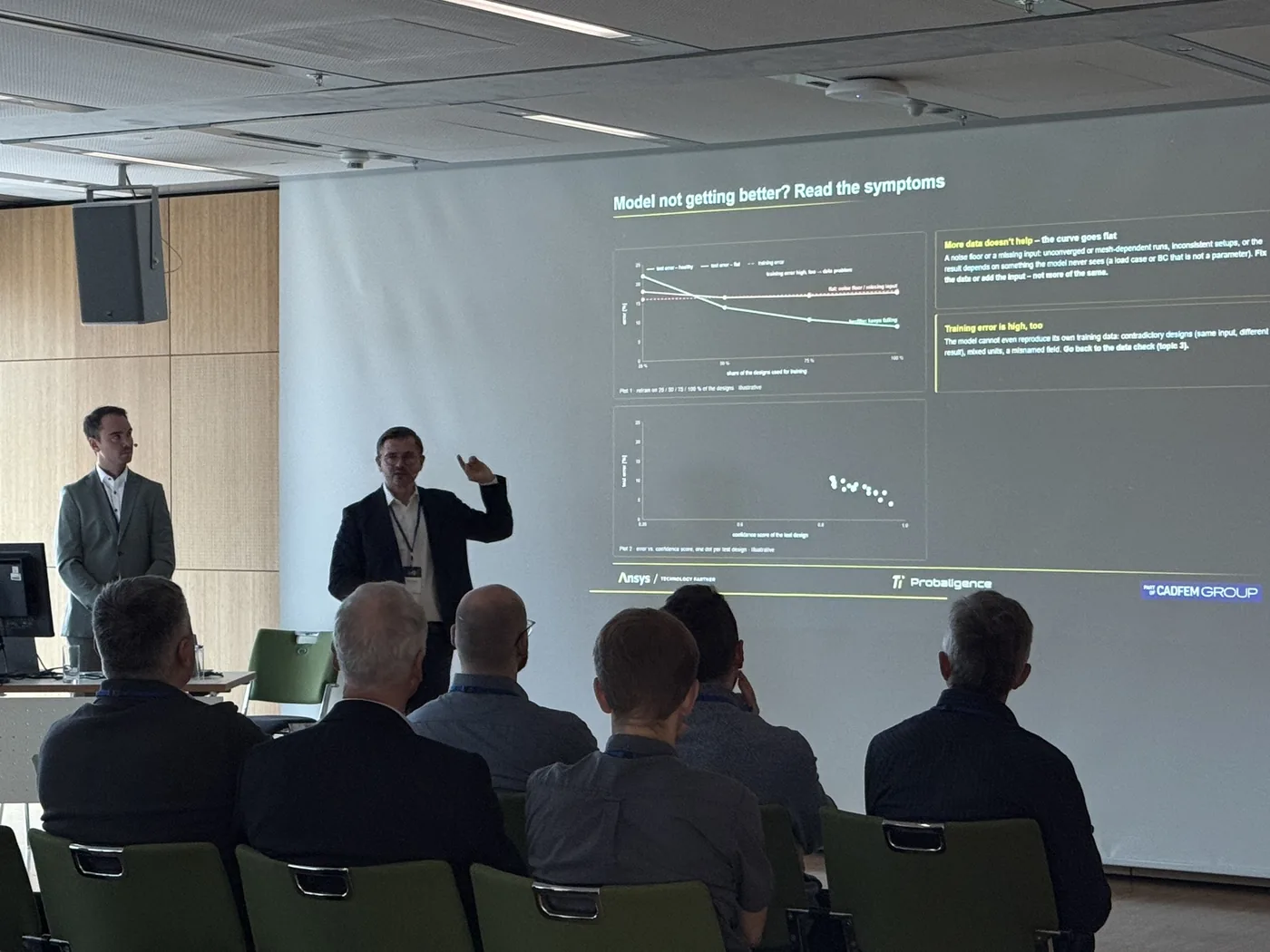
Kevin Cremanns led the deep dive in the AI session, focusing on practical questions around engineering machine learning: how to inspect the available data, how to recognize why a model stops improving and when generating more data will actually help.
One recurring point was that model performance cannot be separated from the engineering data behind it.
AI moves further into the engineering workflow
The same direction appeared throughout the conference.
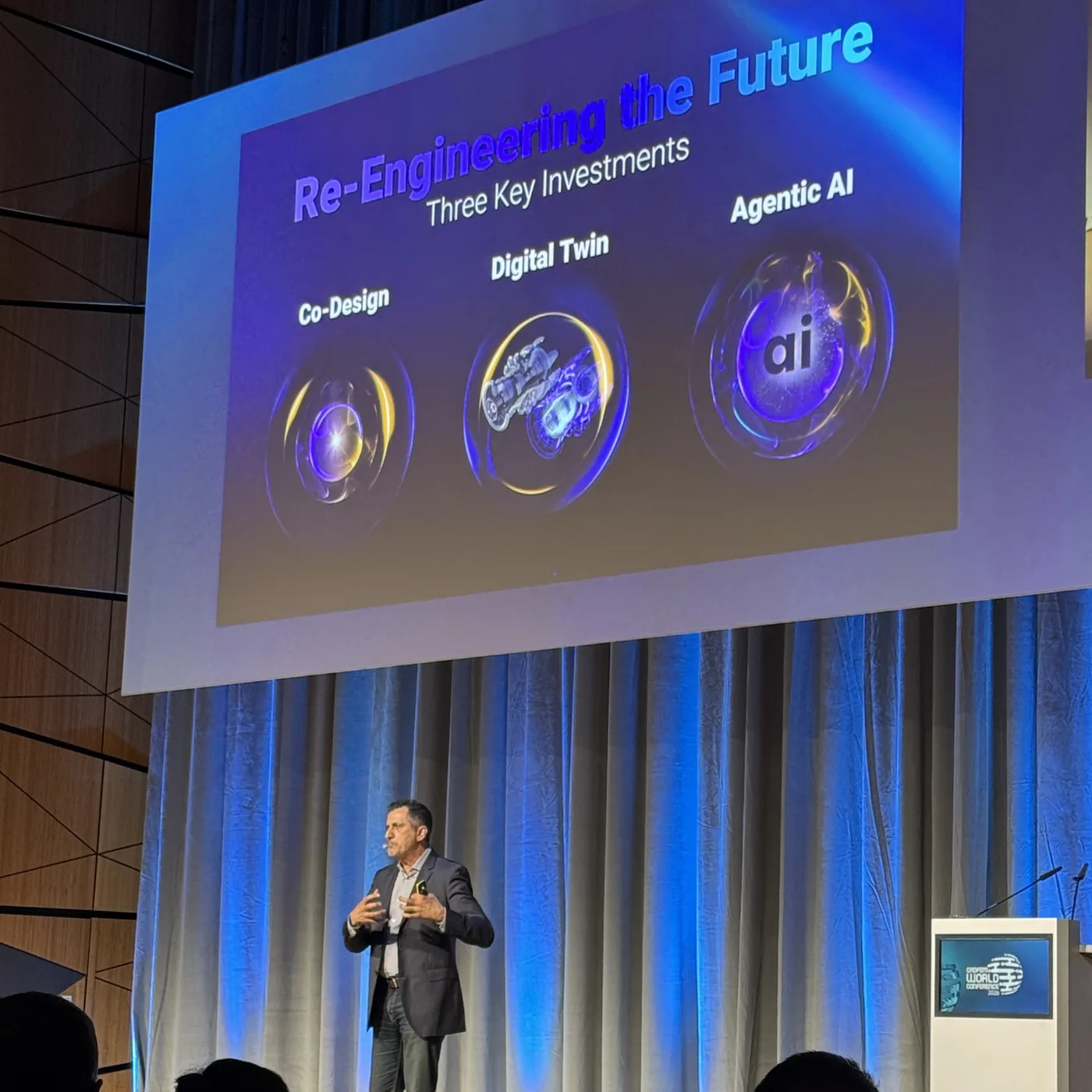
Sassine Ghazi, CEO of Synopsys, highlighted co-design, digital twins and agentic AI as three key investments for re-engineering the future. Agentic workflows also appeared repeatedly in discussions around how simulation will fit into increasingly automated development processes.
The direction is becoming clearer: the physics-based solver does not disappear. Instead, simulation, machine learning and AI agents increasingly work together within the same engineering process.
Where engineering is heading
One theme came up again and again in Darmstadt: AI is moving deeper into the engineering process.
The next step is not simply another AI model beside the simulation workflow. It is a more connected process in which simulation, surrogate models, optimization and AI agents work together.
Physics-based solvers remain essential. They generate training data, provide the reference for validation and step in when a prediction needs to be checked. Probabilistic models can make repeated evaluations much faster and add uncertainty information to help decide when another solver run is needed.
AI agents add another layer. They can prepare data, build and adapt workflows, connect engineering tools, check results against defined rules and take over repetitive steps that today require manual work.
The CAD Agent demo shown in the opening keynote points in the same direction: an engineering request becomes an editable parametric model and can then move into the rest of the workflow.
For us, the longer-term vision is increasingly clear: engineers define the goal, the engineering knowledge, the rules and the acceptance criteria. AI models and agents execute more of the individual steps, while the process remains visible and the engineer stays in control.
That is also the direction of STOCHOS Flow. STOCHOS Flow 1.3.0 introduced a new agent core that can work through tasks, inspect results, correct errors and report how its work was checked.
The conference made one thing clear to us: agentic engineering is no longer only a future concept. The individual components already exist. The interesting question now is how far they can be connected into reliable engineering workflows.
Thank you, Darmstadt
Thank you to CADFEM for organizing the first CADFEM World Conference and to everyone who stopped by our booth, joined the discussions or shared an engineering problem with us.
We left Darmstadt with plenty of ideas about where AI, simulation and agentic engineering workflows are heading next.
If we did not meet at the conference, request a demo and we will walk you through STOCHOS and STOCHOS Flow.
Impressions from Darmstadt